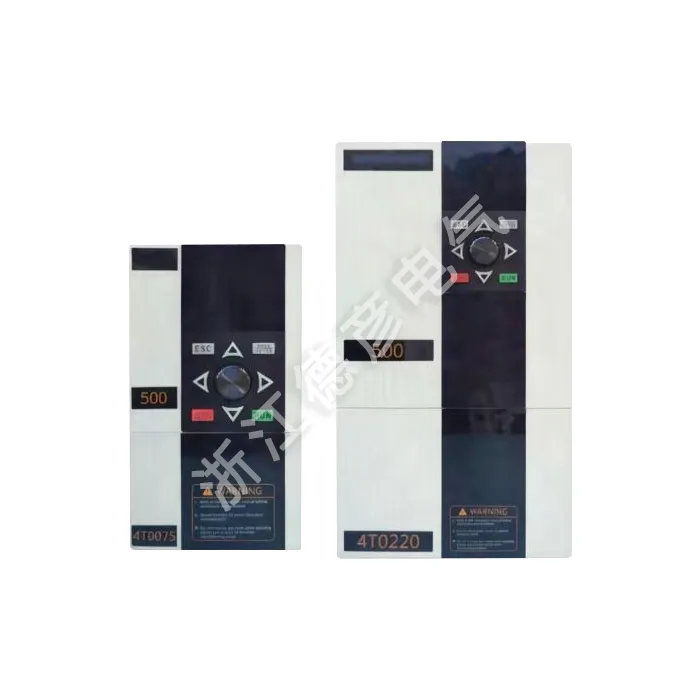
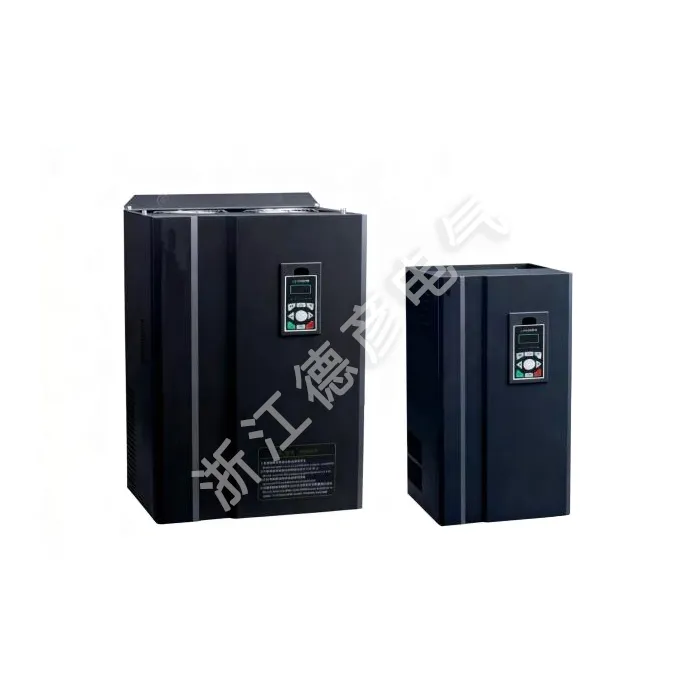
High Performance Frequency Converter with Vector Control
Real‑world industrial sites are filled with messy challenges: heavy‑load kick‑off failures, speed drift under shifting loads, random trips caused by grid spikes, and costly downtime triggered by mechanical resonance. This High Performance Frequency Converter with Vector Control is built to solve those real‑pain‑points instead of only listing theoretical parameters. It delivers reliable torque output, stable speed feedback and flexible expandability for system integrators, machinery OEMs and end‑user production workshops, cutting unplanned downtime and lowering overall maintenance expenditure across long‑term running cycles.
What real‑world headaches does a vector‑based frequency converter solve on production floors
Ordinary general‑purpose VFD can handle simple fan and pump steady‑load scenarios well. But when facing complex variable‑load field conditions, lots of hidden failures will surface, directly affecting production efficiency and product yield. The High Performance Frequency Converter with Vector Control targets these on‑site practical troubles for optimization, rather than focusing only on lab‑based test figures.
● Heavy‑load startup stall problem: Traditional drives output limited torque at low frequency. Static heavy‑duty equipment cannot spin up normally, motor stalls or triggers over‑current protection. This vector converter guarantees stable torque output under low‑frequency condition, letting fully‑loaded machinery start smoothly without stalling risk.
● Speed deviation caused by fluctuating load: Material weight change, friction variation will lead to obvious speed drift. Tiny speed error brings large‑batch defective goods for printing, slitting and textile equipment. Built‑in slip correction function offsets speed deviation dynamically, keeps stable running speed even when load keeps changing.
● Random unexpected tripping from grid and mechanical interference: Grid voltage fluctuation, mechanical resonance and impulse load often trigger protection shutdown. Frequent stops bring material waste and broken production rhythm. Optimized anti‑trip logic and frequency‑hopping function reduce unexpected shutdown probability greatly.
● Insufficient function scalability for process upgrade: Many old‑type converters have limited frequency source options. Once production technology updates, users have to add extra PLC or modify wiring. Rich internal logic and multi‑group frequency superposition function support process adjustment without large‑scale hardware reconstruction.
● Short service life of mechanical parts caused by rough motor operation: Unstable output creates vibration and noise, accelerating wear on bearings and transmission structures. Optimized acceleration‑deceleration curve and carrier frequency adjustment make motor run smoother and extend the service cycle of matched mechanical hardware.
How vector control changes the actual running experience of your motor‑driven equipment
Many buyers regard vector control as a vague industry term, ignoring what practical improvements it brings to field debugging and daily production. Different from fixed‑ratio V/F control, the algorithm inside the High Performance Frequency Converter with Vector Control continuously monitors motor working state and adjusts output dynamically according to real‑site load demand.
● Multi‑mode switching adapts different transformation and new‑build projects: Open‑loop vector works well for renovation projects without encoder wiring, improves low‑speed performance without extra hardware cost. Closed‑loop vector cooperates with encoder for high‑precision occasions. Reserved V/F mode supports direct replacement of old‑generation drives, no need to rewrite original control logic.
● Dynamic current decomposition realizes real‑time torque matching: The converter separates motor current into excitation part and torque part. Two components get independent adjustment, so output power always matches actual load requirement instead of following fixed setting value.
● Built‑in slip compensation eliminates speed loss: Temperature rise and load increase will produce natural motor slip. Automatic compensation logic offsets speed loss in real‑time, avoids speed drop when equipment bears heavier load.
● Embedded PID reduces dependence on external controllers: Constant tension, constant pressure and constant speed closed‑loop control can be finished inside the converter. Users save cost on purchasing independent PID controller and simplify whole‑system wiring.
● Short‑term power‑failure ride‑through protects continuous production: When grid has instantaneous voltage drop or brief power loss, the drive maintains running status temporarily, prevents whole‑line shutdown caused by short‑time grid abnormality.
Site‑oriented selection notes: match converter capability to your actual working condition
Blindly choosing power rating only according to motor nameplate often causes insufficient overload capacity in practical application. Working condition difference decides whether the High Performance Frequency Converter with Vector Control can deliver expected results for your project. You need to evaluate load characteristic, start‑stop frequency and grid environment before final selection.
● Heavy‑impact frequent start‑stop working condition: For conveyor, hoist and extruder with frequent start‑stop, select heavy‑duty rated model. Pay attention to built‑in braking unit configuration. Models within 22kW come with internal braking unit, users only need to connect external braking resistor for fast‑stop demand.
● High‑precision speed‑control requirement: If your equipment needs strict speed stability, select closed‑loop vector solution and add matched encoder module. Open‑loop vector meets most ordinary industrial occasions, but cannot reach ultra‑high precision level.
● Poor‑quality grid environment: For workshops with serious voltage fluctuation, confirm AVR automatic voltage regulation and power‑failure ride‑through function. These features lower failure rate under unstable power supply.
● Multi‑process cyclic production line: Confirm frequency‑source quantity and simple PLC multi‑step speed function. It supports multi‑segment speed operation and logic switching, adapts complex craft flow.
● Altitude and ambient temperature restriction: When installation site altitude exceeds 1000 meters or ambient temperature is higher than 40℃, users need to do derating use to guarantee long‑term stable operation.
Practical performance benchmarks you can verify on‑site
Many parameters on datasheet are tested under ideal laboratory environment. What matters most is performance you can observe and verify at your production site. These practical indicators reflect real‑use value of this High Performance Frequency Converter with Vector Control.
● Low‑frequency heavy‑load torque output: Achieve 150% rated torque output at 0.5Hz. You can test full‑load startup on site, check whether motor can start smoothly without obvious jitter or over‑current alarm.
● Speed‑stabilizing performance under variable‑load interference: Open‑loop vector speed‑regulation ratio reaches 1:200, closed‑loop vector up to 1:1000. Observe speed fluctuation value when load changes suddenly to judge control stability.
● Overload resistance for instantaneous impact load: Support 150% rated current lasting 60 seconds. Deal with short‑time impact load during equipment startup and material processing, avoid frequent overload protection.
● Mechanical resonance suppression effect: Two‑stage frequency hopping function helps users skip mechanical resonance points. After commissioning, check whether vibration and noise obviously decrease at easy‑to‑resonate rotating speed.
● Communication and IO response speed: Standard RS485 Modbus communication, abundant digital and analog terminals. Test signal response delay when linking with upper computer or sensor signal input, guarantee linkage real‑time performance.
Typical application scenarios driven by real‑user requirements
Different industries put forward differentiated practical demands for frequency converter. This high‑performance vector frequency converter solves targeted pain points for each scene, instead of applying one‑fit‑all solution for all machinery devices.
● CNC and high‑speed spindle equipment: Users pursue machining accuracy and low‑speed cutting capacity. Vector control provides stable torque output for spindle, reduces workpiece dimensional error caused by speed fluctuation.
● Printing, slitting and packaging machinery: Constant‑tension control is core requirement. Stable speed output avoids printing misalignment and slitting size deviation, reduces product reject rate.
● Textile and dyeing production equipment: Uneven fabric tension comes from unstable motor speed. Vector‑based control keeps consistent running state, improves finished‑textile uniformity.
● Material lifting and conveying machinery: Demands focus on smooth startup and stop, prevent jitter and slipping risk. Sufficient low‑speed torque ensures heavy‑material stable transmission.
● Chemical, metallurgy continuous‑production equipment: Long‑time non‑stop running, anti‑interference and overload‑resistance are emphasized. Perfect protection system reduces unexpected shutdown loss.
● General energy‑saving transformation for fans and pumps: Compatible with V/F mode, finish energy‑saving speed‑regulation transformation, lower long‑term power consumption of workshop equipment.
Hardware & terminal layout thinking for field installation & debugging
Field electricians care about installation convenience, wiring difficulty and later maintenance efficiency. Product hardware and terminal design take actual site operation experience into consideration, reduce debugging difficulty for engineering teams.
● Terminal resource allocation reserves expansion space: Equipped with multi‑channel digital input and output, analog input and output, high‑speed pulse port. Support sensor signal access, multi‑group interlock and signal feedback, reserve space for later function upgrade.
● Optional accessory cards satisfy personalized demands: IO expansion card, isolated communication card and PG encoder feedback card are optional. Users purchase corresponding accessories according to project requirement, no need to pay for unused functions.
● Clear nameplate and parameter marking: Complete nameplate marks model, rated power, input‑output specification and serial number. Convenient for warehouse management, project acceptance and after‑sales traceability.
● Heat‑dissipation structure adapts long‑time running: Optimized heat‑dissipation channel design, convenient for dust removal and daily maintenance. Users can clean fan and radiator regularly to prolong service life.
● Detachable operation panel design: Support panel remote‑mount installation. Operators can finish parameter checking and modification outside electrical cabinet, convenient for on‑site debugging work.
Troubleshooting‑oriented protection design
Protection function is not only for preventing converter self‑damage, but also protecting motor and front‑end mechanical equipment, helping engineers quickly locate fault sources when abnormal conditions occur.
● Complete electrical fault protection mechanism: Include over‑current, over‑voltage, under‑voltage, over‑heat, overload, input‑output phase loss and motor short‑circuit protection. Once abnormal value appears, trigger corresponding protection action and record fault code.
● Stall prevention suppresses mis‑trip effectively: Intelligent current‑limiting and voltage‑limiting logic works during acceleration, deceleration and constant‑speed running. Avoid unnecessary shutdown caused by instantaneous impact signal.
● Fault code recording function assists after‑sales troubleshooting: Store multiple groups of historical fault records, record corresponding running parameters when fault happens. Maintenance personnel can quickly judge root cause without repeated field‑site simulation.
● Power‑on motor short‑circuit detection: Detect motor circuit state during power‑on phase. Avoid secondary damage caused by starting converter under motor short‑circuit condition.
● Over‑temperature alarm and protection chain: Monitor internal temperature in real‑time. Give early warning before over‑heating, execute protection shutdown when temperature exceeds safe threshold, prevent hardware burning.
|
Item
|
Specification
|
|
Product Name
|
High Performance Frequency Converter with Vector Control
|
|
Control Mode
|
Open‑loop vector, Closed‑loop vector, V/F control
|
|
Rated Voltage Level
|
220V Single‑phase / 380V Three‑phase
|
|
Power Range
|
0.75kW‑750kW
|
|
Low‑frequency Torque
|
150% rated torque @0.5Hz
|
|
Max Output Frequency
|
0‑500Hz
|
|
Built‑in Braking Unit
|
Standard for models ≤22kW
|
|
Communication
|
Standard RS485, Modbus RTU
|
|
Core Functions
|
PID closed‑loop, transient power‑failure ride‑through, frequency hopping, stall prevention
|
|
Protection
|
Over‑current, over‑voltage, under‑voltage, over‑heat, overload, phase loss, short‑circuit
|
|
Custom Service
|
OEM, ODM, preset parameter, logo customization
|
Frequently Asked Questions
Q: What kinds of motor can match this high‑performance vector frequency converter?
A: It fits most common asynchronous AC motors. Open‑loop vector works for ordinary retrofit scenarios. When you need high‑precision control, you should use matched encoder‑equipped motor for closed‑loop vector mode.
Q: Do I have to add encoder to use vector control?
A: No. Open‑loop vector runs without encoder. Encoder is only required when you need closed‑loop high‑precision speed‑stabilizing effect for spindle or tension‑control equipment.
Q: How to handle frequent braking scenarios?
A: Models within 22kW carry built‑in braking unit. Users just need to configure proper braking resistor. For high‑power models above 22kW, external braking unit should be prepared separately.
Q: Can it keep working when grid voltage fluctuates heavily?
A: AVR automatic voltage‑regulation function stabilizes output voltage. Short‑time power‑failure ride‑through handles instantaneous power drop. But it cannot work normally under long‑term serious power‑supply abnormality.
Q: Is OEM service available for bulk order?
A: Yes. We support custom logo, pre‑set factory parameters and function adaptation according to customer machinery characteristics for large‑volume orders.
Q: What should be noticed when installing at high‑altitude workshop?
A: When altitude goes over 1000m, heat‑dissipation capacity drops. You need to implement power derating to prevent over‑heating failure during long‑time operation.
Q: Can it replace old V/F‑only frequency converter directly?
A: Yes. Reserved native V/F control mode. You can keep original peripheral wiring and control logic, finish equipment upgrade without large‑scale modification.
Get Your Project Solution
Share your motor power, working condition description and control requirement. Our engineering team will give targeted model‑selection suggestion for your industrial equipment.