China Industrial Inverter for Wire Processing Equipment Manufacturer, Supplier, Factory
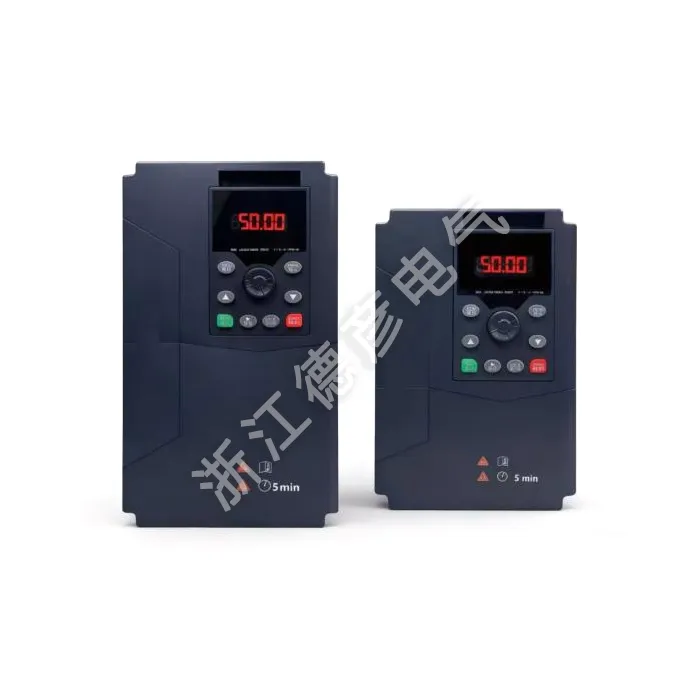
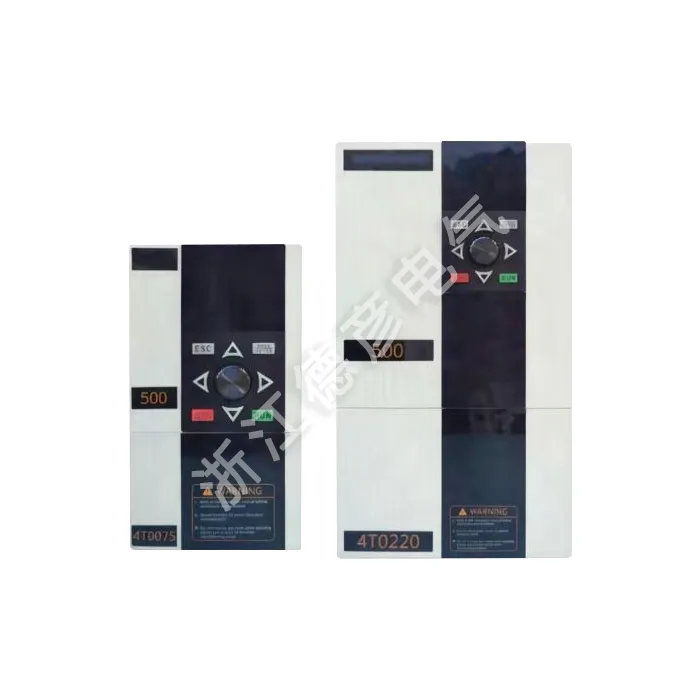
Every wire processing line tells a story — of tension spikes that snap fine copper, of energy bills that creep up with every spool change, of maintenance calls that always come at the worst possible moment. The people who run these lines know that the difference between a good day and a bad day often comes down to how well the drive handles the unexpected. The LNC860L Industrial Inverter for Wire Processing Equipment from Deyan Electric is built to tilt that balance in your favor.
This is not a drive that was designed for pumps and fans and then adapted to wire processing. It was conceived on the drawing floor, with input from operators who deal with the daily realities of wire breakage, roll diameter changes, and the need for consistent tension across varying line speeds. The result is a drive that integrates closed-loop and open-loop tension control, automatic roll diameter calculation, and inertia compensation — all in a package that spans 0.75kW to 400kW. It supports ABZ incremental, U incremental, and resolver encoders, and includes standard RS485 Modbus communication. For wire processing equipment, these are not optional extras; they are essentials that determine whether a line runs profitably or not.
Walk through a typical shift
Start of shift: The operator loads a fresh spool. With a standard drive, this is when tension instability often begins — the drive doesn't know the spool diameter, so it applies the same torque as before, causing either slack or excessive pull. The LNC860L calculates the roll diameter automatically as soon as the line starts, adjusting torque to maintain the set tension from the first meter. End of shift: The spool is nearly full, and the inertia has changed significantly. The drive's automatic inertia compensation adjusts for the increased mass, so the tension remains constant as the spool fills. No manual tuning, no trial runs — just consistent operation throughout the shift.
Between shift changes, there are speed adjustments, stops, and starts. Each transition is a moment of risk for wire breakage. The drive's fast current-limiting function and advanced PID algorithm respond to speed changes in milliseconds, preventing the overshoot that causes wire snap. And when a break does occur — because even the best equipment can't prevent every anomaly — the built-in wire-break detection triggers a controlled stop before the broken wire can wrap around rollers, saving both time and material.
Why this drive stands apart
In the world of wire processing, not all inverters are created equal. Many manufacturers offer drives that can "handle" tension control, but the difference is in the details — and the details determine whether you spend your day troubleshooting or producing.
|
Feature
|
LNC860L Industrial Inverter
|
Standard Industrial VFD
|
|
Tension control architecture
|
Dedicated mathematical model with roll diameter tracking
|
Generic PID, requires external sensors and programming
|
|
Inertia management
|
Adaptive compensation, continuous calculation
|
Static or manual adjustment
|
|
Break detection
|
Integrated, with programmable response
|
External sensor and logic required
|
|
DC bus integration
|
Supports shared bus for multi-motor efficiency
|
Typically not supported
|
|
Braking capability
|
Built-in unit for models ≤22kW
|
Usually an extra-cost option
|
|
Encoder support
|
Three types: incremental, U, resolver
|
Often restricted to one type
|
|
Response to load changes
|
Fast, with anti-overshoot logic
|
Slower, prone to hunting
|
|
Communication
|
RS485 Modbus standard, easy integration
|
May require add-on modules
|
|
Power range
|
0.75kW – 400kW, continuous
|
Varies, often gaps in coverage
|
The practical consequence of these differences is straightforward: with the LNC860L, the line runs longer between adjustments, produces less scrap, and consumes less energy. For a medium-sized wire plant processing 10 tons per day, these improvements can translate to a reduction in operating costs that pays for the drive within the first year.
Technical foundation for processing demands
The specifications below represent the core capabilities that support reliable wire processing. These are not peak values; they are the sustained performance characteristics verified under continuous operation.
|
Parameter
|
Specification
|
|
Power range
|
0.75kW – 400kW, 380V three-phase
|
|
Output frequency
|
0 – 500Hz, resolution 0.01Hz
|
|
Control modes
|
SVC, V/F, FVC (closed-loop vector)
|
|
Starting torque
|
150% at 0.5Hz
|
|
Speed regulation
|
1:100 (SVC) / 1:1000 (FVC)
|
|
Speed stability
|
±0.5% (SVC) / ±0.02% (FVC)
|
|
Overload rating
|
150% for 60 seconds
|
|
Carrier frequency
|
0.8kHz – 12kHz, auto-adaptive
|
|
Acceleration/Deceleration
|
0.1 – 6500s, linear or S-curve
|
|
DC braking
|
0.0% – 100.0% current
|
|
Digital I/O
|
6 digital inputs (one high-speed), 1 digital output, 1 relay
|
|
Analog I/O
|
2 inputs (0–10V / 0–20mA), 2 outputs (0–10V / 0–20mA)
|
|
Protection
|
Over-voltage, over-current, overload, over-heat, phase loss, short-circuit detection at power-on
|
|
Operating environment
|
-10°C to +40°C (derating to 50°C), humidity <95% RH, altitude ≤1000m
|
One specification that often goes unnoticed but matters greatly in wire processing is the automatic voltage regulation (AVR). In many industrial areas, voltage sags are common. The LNC860L maintains stable output even when the input voltage fluctuates by ±15%, ensuring that tension control remains precise regardless of grid conditions.
Which processes benefit most
The versatility of this inverter extends across the full spectrum of wire processing equipment:
• Fine wire drawing (0.05mm – 0.5mm) — The high speed accuracy of closed-loop vector control ensures consistent diameter, even at high line speeds.
• Medium and heavy gauge drawing (0.5mm – 12mm) — High torque at low speeds and robust overload capacity handle the demands of larger wire.
• Stranding and bunching machines — Precise speed synchronization between multiple motors is achieved through the drive's advanced speed control and communication.
• Extrusion and coating lines — Tension control at the take-up ensures even coating and prevents deformation.
• Rewinding and spooling stations — The open-loop tension mode with automatic diameter tracking eliminates the need for mechanical dancer arms, simplifying mechanical design.
The built-in 16-step speed control and simple PLC functionality allow the drive to handle complex sequences without an external controller. For example, a typical cycle might include a pre-tension phase, an acceleration ramp, a steady-state drawing phase, a deceleration ramp as the spool fills, and a final stop — all programmed within the drive.
Full model selection for wire processing equipment
Selecting the correct model ensures optimal performance and prevents oversizing or undersizing. The table below lists all available models, with single-phase (220V) options for auxiliary equipment and three-phase (380V) units for main processing lines.
|
Model
|
Power capacity (kVA)
|
Input current (A)
|
Output current (A)
|
Motor power (kW)
|
|
Single-phase: 220V ±15%, 50/60Hz
|
|
LNC860L-2S0007GB
|
1.5
|
8.2
|
5.0
|
0.75
|
|
LNC860L-2S0015GB
|
3.0
|
14.0
|
7.0
|
1.5
|
|
LNC860L-2S0022GB
|
4.0
|
23.0
|
9.6
|
2.2
|
|
Three-phase: 380V ±15%, 50/60Hz
|
|
LNC860L-4T0007GB
|
1.5
|
3.4
|
2.1
|
0.75
|
|
LNC860L-4T0015GB
|
3.0
|
5.0
|
3.8
|
1.5
|
|
LNC860L-4T0022GB
|
4.0
|
5.8
|
5.1
|
2.2
|
|
LNC860L-4T0037GB
|
5.9
|
10.5
|
9
|
3.7
|
|
LNC860L-4T0055GB
|
8.9
|
14.6
|
13
|
5.5
|
|
LNC860L-4T0075GB
|
11
|
20.5
|
17
|
7.5
|
|
LNC860L-4T0110GB
|
17
|
26
|
25
|
11
|
|
LNC860L-4T0150GB
|
21
|
35
|
32
|
15
|
|
LNC860L-4T0185GB
|
24
|
38.5
|
37
|
18.5
|
|
LNC860L-4T0220GB
|
30
|
46.5
|
45
|
22
|
|
LNC860L-4T0300G
|
40
|
62
|
60
|
30
|
|
LNC860L-4T0370G
|
57
|
76
|
75
|
37
|
|
LNC860L-4T0450G
|
69
|
92
|
91
|
45
|
|
LNC860L-4T0550G
|
85
|
113
|
112
|
55
|
|
LNC860L-4T0750G
|
114
|
157
|
150
|
75
|
|
LNC860L-4T0900G
|
134
|
180
|
176
|
90
|
|
LNC860L-4T1100G
|
160
|
214
|
210
|
110
|
|
LNC860L-4T1320G
|
192
|
256
|
253
|
132
|
|
LNC860L-4T1600G
|
231
|
307
|
304
|
160
|
|
LNC860L-4T2000G
|
250
|
385
|
377
|
200
|
|
LNC860L-4T2200G
|
280
|
430
|
426
|
220
|
|
LNC860L-4T2500G
|
355
|
441
|
465
|
250
|
|
LNC860L-4T2800G
|
396
|
495
|
520
|
280
|
|
LNC860L-4T3150G
|
445
|
565
|
585
|
315
|
|
LNC860L-4T3550G
|
500
|
617
|
650
|
355
|
|
LNC860L-4T4000G
|
565
|
687
|
725
|
400
|
Models ending with "GB" include a built-in braking unit (standard for 22kW and below). For higher power models, an external braking resistor is recommended for applications requiring rapid deceleration.
Manufacturing and quality practices
Deyan Electric's production facility follows ISO 9001 quality management standards. Each LNC860L Industrial Inverter for Wire Processing Equipment undergoes a series of tests that include:
• Component inspection and burn-in of critical parts (capacitors, IGBTs, control boards).
• Full-load performance test at rated current and ambient temperature for a minimum of 4 hours.
• Protection function verification (over-voltage, over-current, short-circuit, thermal).
• Communication and I/O function validation.
The standard warranty is 18 months from the delivery date. For customers with multiple units, extended warranties are available. Deyan Electric maintains spare parts inventory at regional centers in Europe and North America, ensuring that replacement components are accessible when needed. Remote commissioning support is provided via video conference, and on-site training can be arranged for larger projects.
Questions from the field
Q: This inverter is specified for wire processing — does it also work for cable extrusion?
A: Yes, the same tension control algorithms that manage drawing tension also work for extrusion take-up systems. The key is the ability to maintain constant tension as the spool diameter changes. The LNC860L's automatic roll diameter calculation and inertia compensation are equally applicable to extrusion lines.
Q: How does the drive perform in high-temperature environments common in wire plants?
A: The drive is rated for continuous operation at ambient temperatures up to 40°C without derating. Between 40°C and 50°C, the output current must be derated. The carrier frequency also adjusts automatically to reduce thermal stress. We recommend maintaining adequate clearance around the drive for airflow and, in extreme conditions, considering forced ventilation.
Q: Can we integrate this drive with our existing PLC and HMI?
A: Yes. The RS485 communication supports Modbus RTU protocol, making it compatible with most PLCs and HMIs. The analog inputs and outputs (0–10V / 0–20mA) provide additional connectivity. Parameter mapping is documented in the user manual, and we provide sample communication setups for popular PLC brands.
Q: What is the typical delivery time for a sample unit?
A: For models up to 160kW, sample units can be shipped within 15 working days. Larger units may require 25–30 days. We also offer a 30-day on-site trial program for qualified customers — you can test the drive in your actual production environment before making a purchase decision.
Q: Is there any specific maintenance schedule recommended for this drive?
A: We recommend a visual inspection and cleaning of the cooling fan and heat sink every 6 months. DC bus capacitors should be checked every 3 years, and we offer replacement kits with detailed instructions. The drive's internal diagnostics will also alert you to any abnormal conditions, such as excessive temperature or fan wear.
The LNC860L Industrial Inverter for Wire Processing Equipment is designed to reduce the unpredictability that comes with wire processing. By integrating tension management, break detection, and energy-efficient control into a single package, it helps plants run more consistently and with less intervention. For operations where every meter counts, this drive provides the reliability that makes the difference.