China Wire Drawing Equipment Variable Frequency Drive Manufacturer, Supplier, Factory
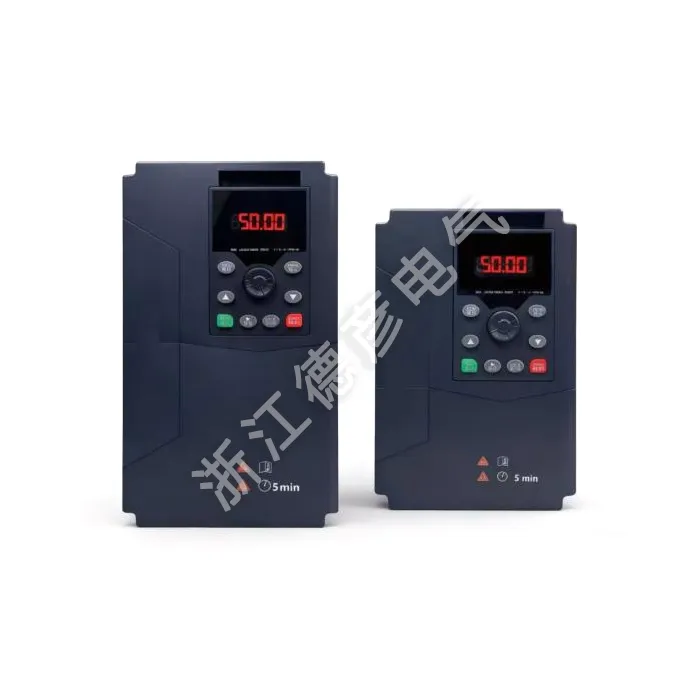
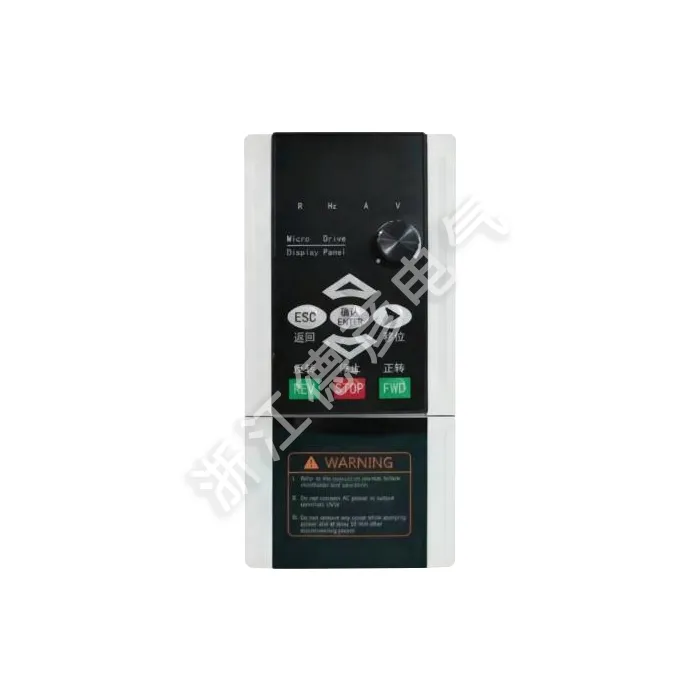
When a drawing line goes down, every minute costs money — not just in lost production, but in material waste, rework, and the labor hours spent clearing broken wire. The LNC860L Wire Drawing Equipment Variable Frequency Drive is designed to keep lines running. It incorporates a built-in mathematical tension winding model, automatic roll diameter calculation, and both closed-loop and open-loop tension control. These features are not add-ons; they are integrated into the drive's core architecture. For maintenance engineers, this means fewer alarms and less time spent tuning parameters. For production managers, it means consistent output quality and higher overall equipment effectiveness. This drive is built for the realities of the drawing floor — dust, temperature variations, and the constant demand for higher throughput.
What drawing equipment operators experience daily
The people who run drawing equipment know the frustrations better than anyone. A spool change should be simple, but often it triggers tension spikes that break the wire. Speed changes should be smooth, but they cause the line to oscillate. And when the wire breaks, clearing it takes time — time that could have been spent making product. The LNC860L Wire Drawing Equipment Variable Frequency Drive changes this.
The drive's automatic roll diameter calculation means that when a new spool is loaded, the drive immediately knows the effective diameter and adjusts torque accordingly. The result is a seamless transition from an empty spool to a full one, without the tension variations that typically cause breaks. The automatic inertia compensation further smooths out the dynamic changes during acceleration and deceleration, so the line runs steadily even when the operator adjusts speed.
Wire-break detection is another feature that operators appreciate. The drive monitors tension in real time. If tension drops suddenly — indicating a break — the drive can trigger a controlled stop or sound an alarm before the broken wire wraps around rollers or damages downstream equipment. This protects both the machinery and the material still on the line.
How it performs in comparison
Many variable frequency drives on the market claim to be suitable for drawing equipment. But there is a significant difference between a drive that can "work" in a drawing application and one that is designed specifically for it. The table below highlights what sets the LNC860L apart from typical general-purpose drives that are often repurposed for drawing lines.
|
Feature
|
LNC860L Wire Drawing Equipment VFD
|
Typical General-Purpose VFD
|
|
Tension control
|
Closed-loop and open-loop, built-in
|
Requires external PLC programming
|
|
Roll diameter tracking
|
Automatic, with mathematical model
|
Not available; external calculation needed
|
|
Inertia compensation
|
Automatic, adaptive
|
Manual tuning, often static
|
|
Break detection
|
Built-in, real-time monitoring
|
Requires external sensors and logic
|
|
DC bus sharing
|
Supported for multi-motor lines
|
Generally not supported
|
|
Braking unit
|
Standard for 22kW and below
|
Optional and often costly
|
|
Encoder compatibility
|
ABZ incremental, U incremental, resolver
|
Limited options
|
|
Response time
|
Fast, with advanced PID
|
Slower, standard PID
|
|
Communication
|
RS485 Modbus standard
|
Often optional
|
|
Power coverage
|
0.75kW to 400kW, continuous
|
Narrower range
|
What this comparison shows is that the LNC860L is not just a drive with a few extra parameters. It is a drive that was conceived from the ground up for drawing equipment. The time saved in commissioning, the reduction in wire breaks, and the lower engineering overhead make it a more cost-effective choice over the life of the equipment — not just at the initial purchase price.
Technical specifications that support drawing operations
The following specifications represent the technical foundation that makes this variable frequency drive suitable for demanding drawing applications. These are not theoretical maximums; they are the actual operating parameters verified during factory testing.
|
Parameter
|
Value
|
|
Power range
|
0.75kW – 400kW, 380V three-phase
|
|
Output frequency
|
0 – 500Hz, 0.01Hz resolution
|
|
Control modes
|
SVC, V/F, FVC (closed-loop vector)
|
|
Starting torque
|
150% at 0.5Hz
|
|
Speed regulation range
|
1:100 (SVC) / 1:1000 (FVC)
|
|
Speed stabilization accuracy
|
±0.5% (SVC) / ±0.02% (FVC)
|
|
Overload capacity
|
150% for 60 seconds
|
|
Carrier frequency
|
0.8kHz – 12kHz, auto-adjusted
|
|
Acceleration/Deceleration
|
0.1 – 6500s, linear or S-curve
|
|
DC braking
|
0.0% – 100.0% braking current
|
|
Digital inputs
|
6 terminals (one high-speed pulse)
|
|
Analog inputs
|
2 channels: 0–10V / 0–20mA
|
|
Analog outputs
|
2 channels: 0–10V / 0–20mA
|
|
Protection functions
|
Over-voltage, over-current, overload, over-heat, phase-loss, motor short-circuit
|
|
Operating temperature
|
-10°C to +40°C (derating to 50°C)
|
|
Maximum altitude
|
1000m
|
The automatic voltage regulation (AVR) function deserves special mention. In many drawing facilities, the power supply is not always stable. Voltage dips from other equipment starting up can cause drives to trip. The LNC860L compensates for input voltage variations up to ±15%, maintaining stable output even when the grid is fluctuating. This feature alone has prevented countless unplanned stops in facilities where power quality is a concern.
Applications across drawing equipment types
The LNC860L Wire Drawing Equipment Variable Frequency Drive is adaptable to a range of drawing equipment configurations. It is not limited to a single machine type or process.
• Single-pass drawing machines — For fine wire applications where precision is paramount, the drive's closed-loop vector control provides the speed accuracy needed to maintain consistent diameter.
• Multi-pass drawing lines — The drive supports DC bus sharing between multiple units, allowing regenerative energy from one motor to be used by others. This reduces energy consumption and lowers operating costs.
• Take-up and let-off stands — The open-loop tension control mode, combined with automatic roll diameter tracking, eliminates the need for complex mechanical dancer systems.
• Plastic drawing and filament extrusion — The same tension control algorithms that work for metal wire are equally effective for plastic monofilaments and fibers.
The built-in 16-step speed control and simple PLC functionality allow the drive to handle sequences such as initial acceleration, steady-state drawing, and controlled deceleration without requiring external controllers. This simplifies both the initial installation and ongoing maintenance.
Complete selection guide for drawing applications
Choosing the correct variable frequency drive for your drawing equipment depends on the motor power and the supply voltage. The following table lists the full LNC860L series, with models for both single-phase (220V) auxiliary equipment and three-phase (380V) main drawing motors.
|
Model
|
Power capacity (kVA)
|
Input current (A)
|
Output current (A)
|
Motor power (kW)
|
|
Single-phase: 220V ±15%, 50/60Hz
|
|
LNC860L-2S0007GB
|
1.5
|
8.2
|
5.0
|
0.75
|
|
LNC860L-2S0015GB
|
3.0
|
14.0
|
7.0
|
1.5
|
|
LNC860L-2S0022GB
|
4.0
|
23.0
|
9.6
|
2.2
|
|
Three-phase: 380V ±15%, 50/60Hz
|
|
LNC860L-4T0007GB
|
1.5
|
3.4
|
2.1
|
0.75
|
|
LNC860L-4T0015GB
|
3.0
|
5.0
|
3.8
|
1.5
|
|
LNC860L-4T0022GB
|
4.0
|
5.8
|
5.1
|
2.2
|
|
LNC860L-4T0037GB
|
5.9
|
10.5
|
9
|
3.7
|
|
LNC860L-4T0055GB
|
8.9
|
14.6
|
13
|
5.5
|
|
LNC860L-4T0075GB
|
11
|
20.5
|
17
|
7.5
|
|
LNC860L-4T0110GB
|
17
|
26
|
25
|
11
|
|
LNC860L-4T0150GB
|
21
|
35
|
32
|
15
|
|
LNC860L-4T0185GB
|
24
|
38.5
|
37
|
18.5
|
|
LNC860L-4T0220GB
|
30
|
46.5
|
45
|
22
|
|
LNC860L-4T0300G
|
40
|
62
|
60
|
30
|
|
LNC860L-4T0370G
|
57
|
76
|
75
|
37
|
|
LNC860L-4T0450G
|
69
|
92
|
91
|
45
|
|
LNC860L-4T0550G
|
85
|
113
|
112
|
55
|
|
LNC860L-4T0750G
|
114
|
157
|
150
|
75
|
|
LNC860L-4T0900G
|
134
|
180
|
176
|
90
|
|
LNC860L-4T1100G
|
160
|
214
|
210
|
110
|
|
LNC860L-4T1320G
|
192
|
256
|
253
|
132
|
|
LNC860L-4T1600G
|
231
|
307
|
304
|
160
|
|
LNC860L-4T2000G
|
250
|
385
|
377
|
200
|
|
LNC860L-4T2200G
|
280
|
430
|
426
|
220
|
|
LNC860L-4T2500G
|
355
|
441
|
465
|
250
|
|
LNC860L-4T2800G
|
396
|
495
|
520
|
280
|
|
LNC860L-4T3150G
|
445
|
565
|
585
|
315
|
|
LNC860L-4T3550G
|
500
|
617
|
650
|
355
|
|
LNC860L-4T4000G
|
565
|
687
|
725
|
400
|
Models with "GB" suffix include a built-in braking unit, standard for 22kW and below. For higher power units, an external braking resistor is recommended.
Reliability and support infrastructure
Deyan Electric maintains an ISO 9001-certified production facility with comprehensive testing capabilities. Each LNC860L Wire Drawing Equipment Variable Frequency Drive is subjected to a 4-hour full-load burn-in test before it leaves the factory. This test verifies thermal performance, component integrity, and control stability under actual operating conditions.
The standard warranty period is 18 months from the date of delivery. For customers with multiple units or ongoing projects, extended warranty and support packages are available. Deyan Electric also stocks common spare parts — including cooling fans, DC bus capacitors, and IGBT modules — at regional warehouses in Europe and North America, reducing the time required to obtain replacement components.
Commissioning support is provided remotely via video guidance, with on-site assistance available for larger projects. The drive's parameter structure is organized specifically for drawing applications, and Deyan Electric provides pre-configured macro settings for common drawing line configurations. This reduces the time needed to get a new drive operational.
Frequently asked questions
Q: Can this variable frequency drive handle both ferrous and non-ferrous wire drawing?
A: Yes. The drive's torque and speed control parameters are adjustable to accommodate different materials. For steel wire, which requires higher torque at low speeds, the drive's 150% starting torque at 0.5Hz provides sufficient capability. For copper and aluminum, the control parameters can be optimized for faster response and higher speeds. Multiple parameter sets can be stored in the drive for quick changeover.
Q: What is the typical payback period when replacing older drives with the LNC860L?
A: Based on customer feedback, the payback period typically ranges from 12 to 18 months. The savings come from reduced wire breakage, lower energy consumption (especially with DC bus sharing in multi-motor lines), and decreased maintenance labor. In facilities with high throughput, the payback can be even shorter.
Q: Is the drive compatible with existing motors, or does it require special motors?
A: The LNC860L is compatible with standard induction motors and permanent magnet motors. The control modes (SVC, V/F, FVC) allow the drive to work with a wide range of motor types without requiring modifications. The auto-tuning function optimizes the drive parameters for the connected motor, ensuring peak performance.
Q: How does the drive handle the thermal demands of continuous drawing operations?
A: The LNC860L is designed for continuous duty. The carrier frequency adjusts automatically based on load and thermal conditions, reducing switching losses when the drive is heavily loaded. The drive also includes thermal monitoring and protection, with derating features if the ambient temperature exceeds 40°C. The 4-hour burn-in test at the factory validates thermal performance before shipment.
Q: What documentation and training are available for maintenance teams?
A: Each drive includes a comprehensive user manual covering installation, parameter configuration, fault diagnosis, and preventive maintenance. Deyan Electric also provides online training sessions for maintenance personnel, focusing on common issues in drawing applications and how to address them. For larger orders, on-site training can be arranged.
Deyan Electric's LNC860L Wire Drawing Equipment Variable Frequency Drive is engineered to improve production consistency and reduce downtime in drawing operations. With its specialized tension control features, robust construction, and responsive support, it is a drive that drawing equipment operators can rely on for sustained performance.