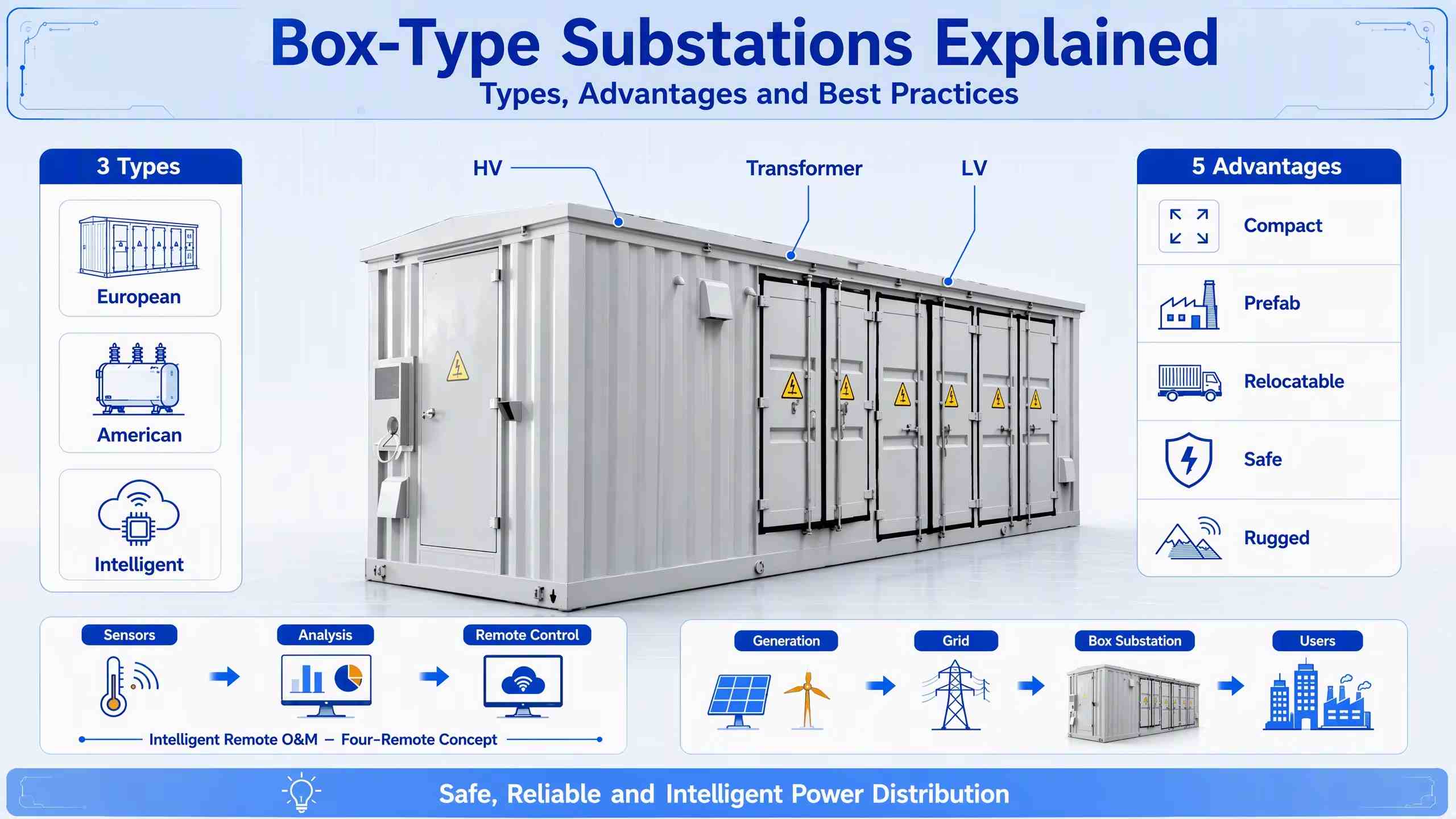
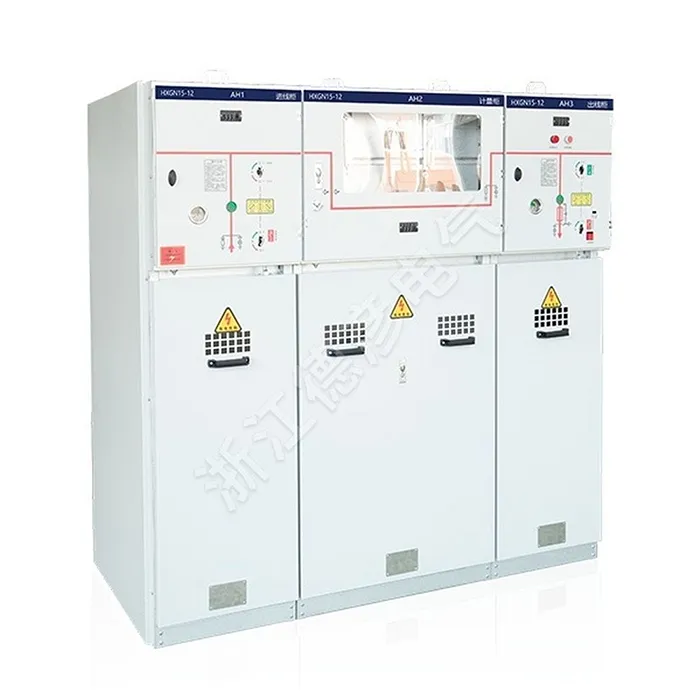
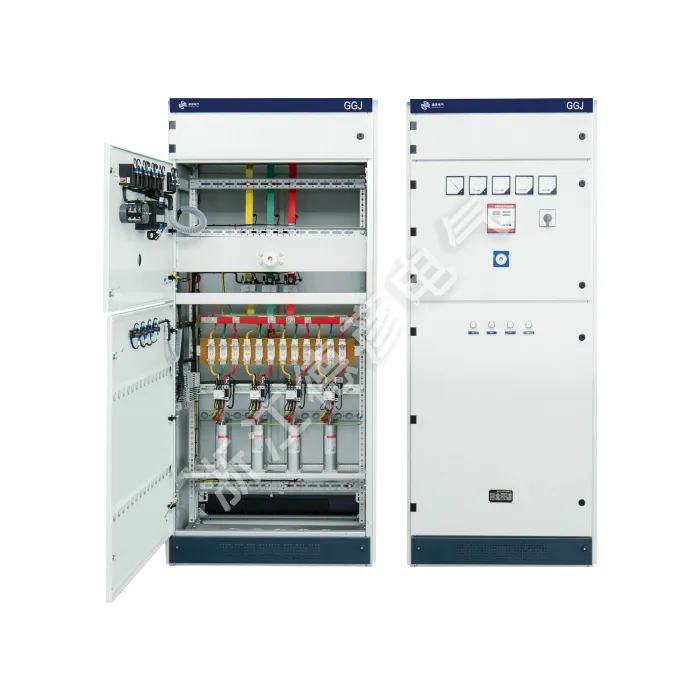
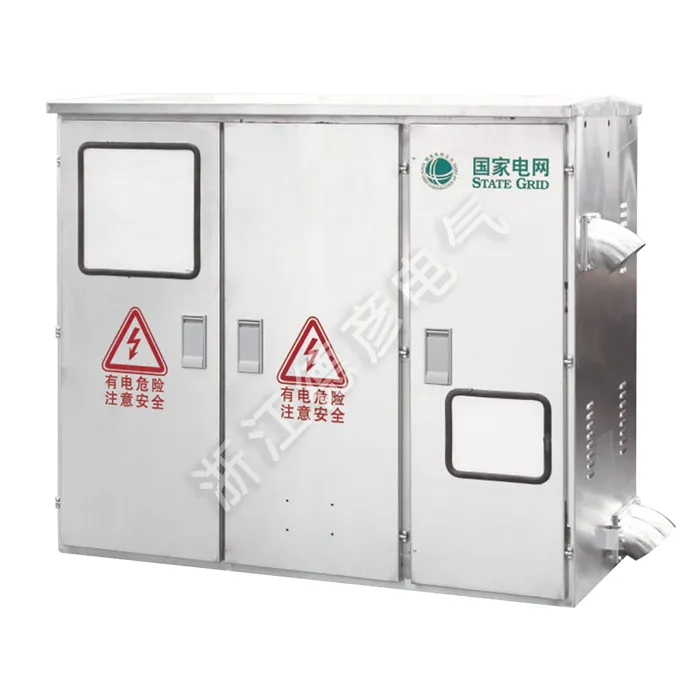
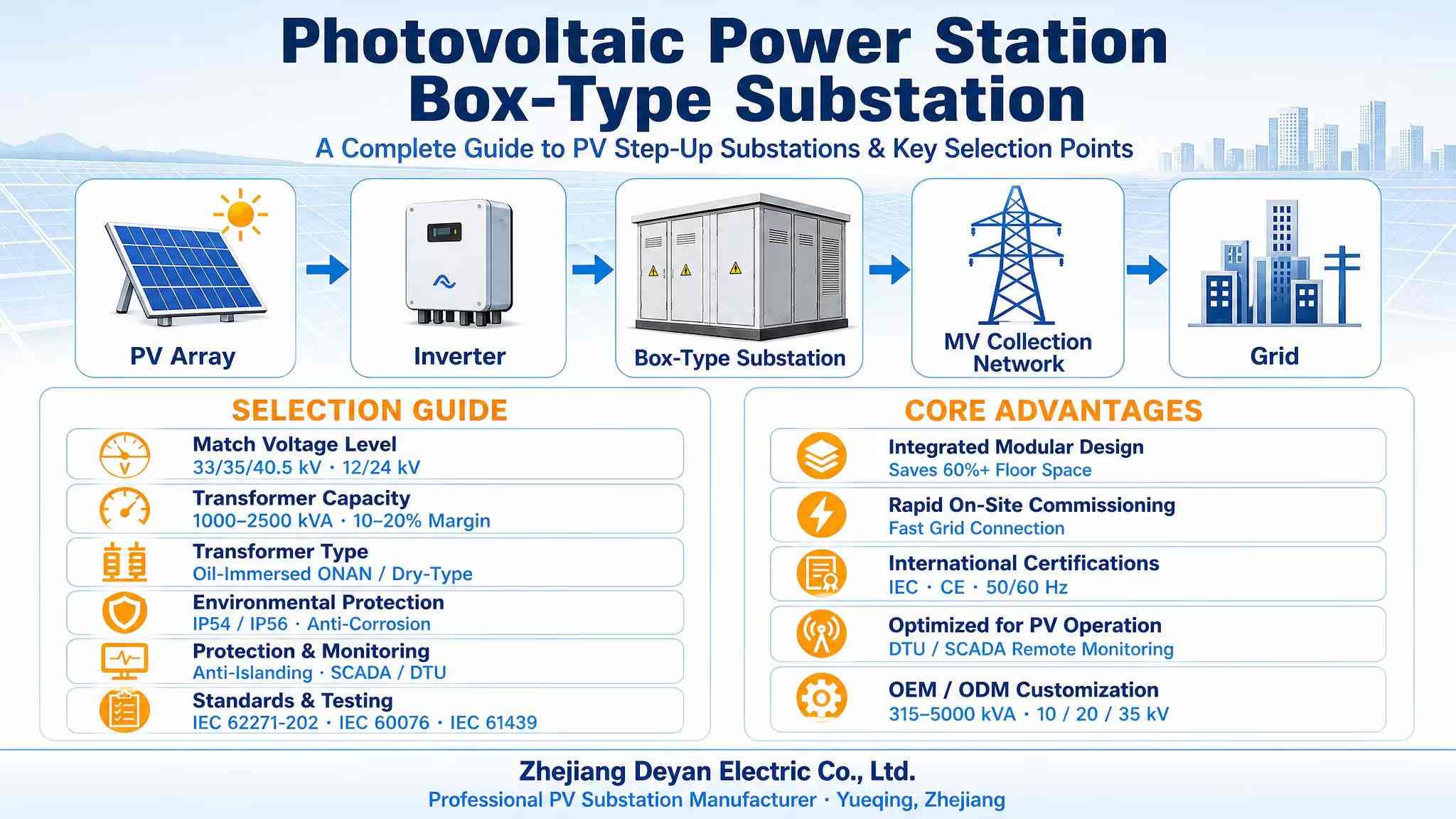
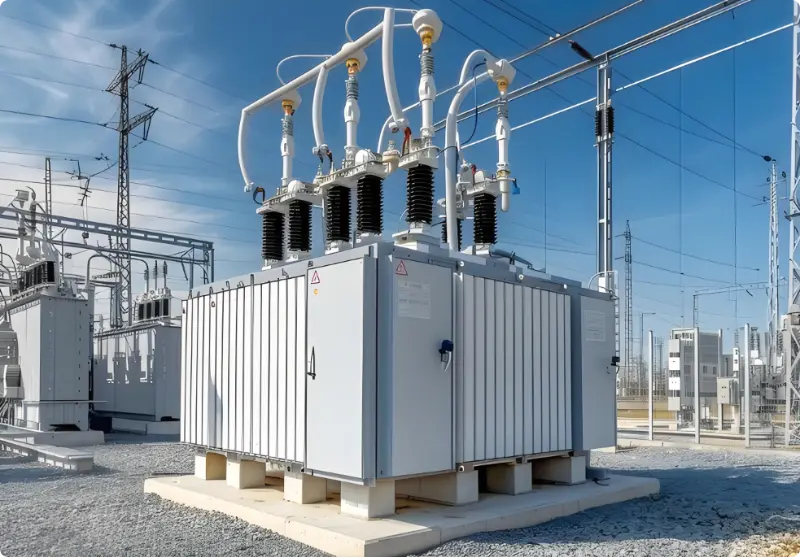
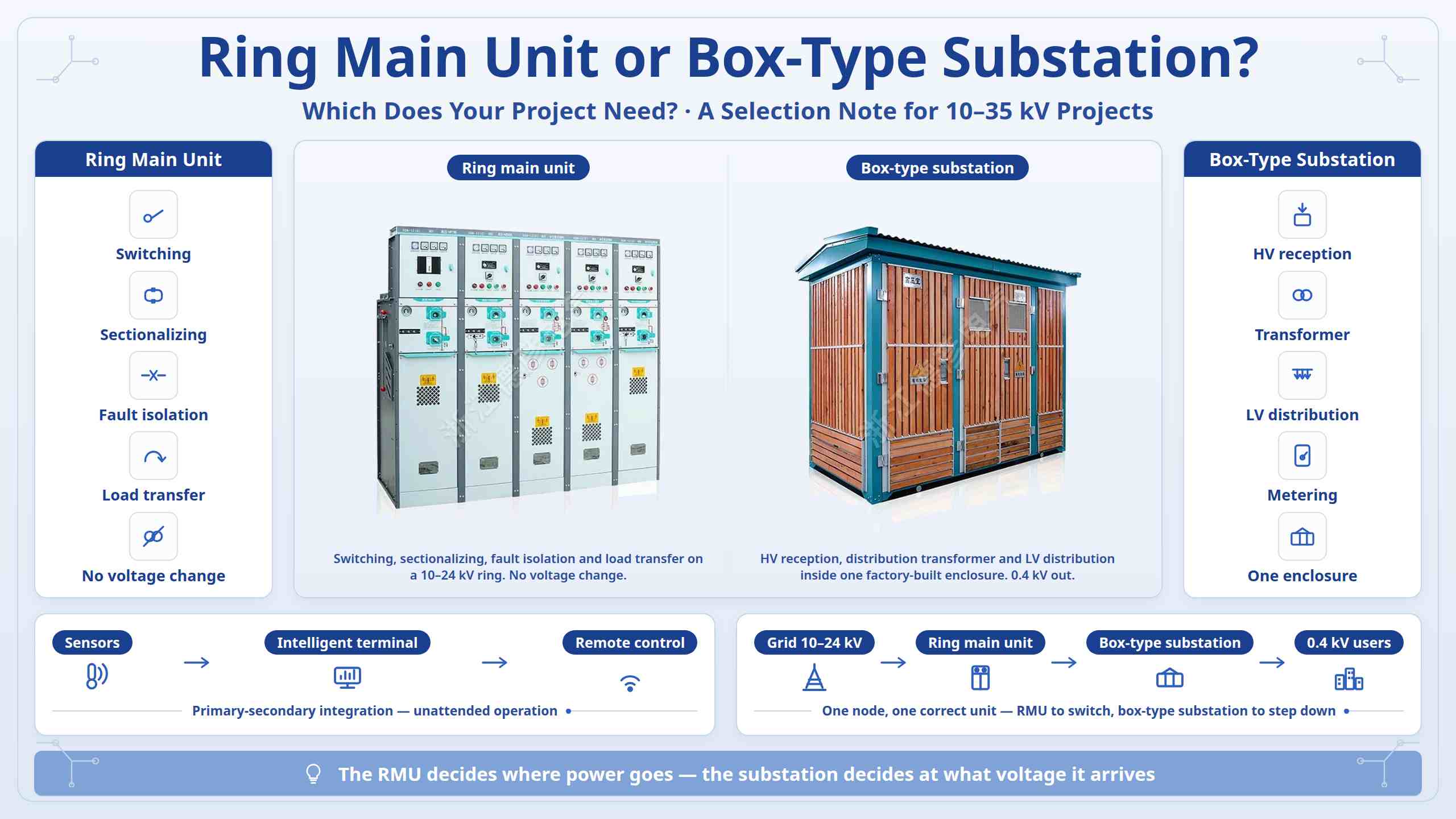
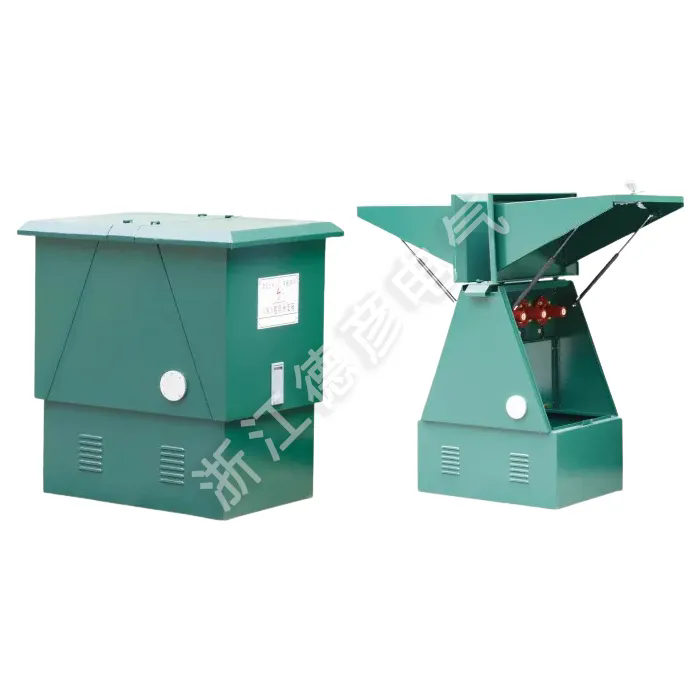
Box-type substations (prefabricated substations) integrate high-voltage switch cabinets, transformers and low-voltage distribution panels into a fully enclosed metal cabinet. Prefabricated in factories, they can be put into operation merely via integral hoisting and on-site wiring. Boasting short construction cycles, small land occupation and integral relocability, they have become the mainstream alternative to traditional civil engineering substations in 10--35 kV power distribution systems.
I. Three Major Structural Types
1. European-style Box Substation (Combined Type)
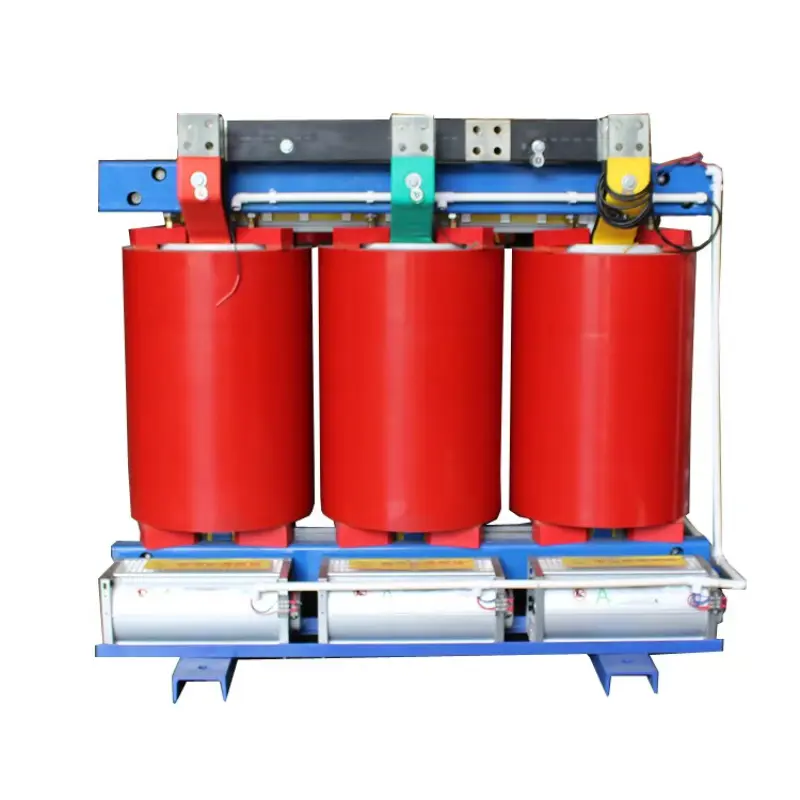
Adopting a compartmentalized structure with independent separated chambers for high-voltage, transformer and low-voltage sections, it supports oil-immersed or dry-type transformers (50--2500 kVA). It allows expandable configurations including reactive power compensation, metering and dual power supply switching. As the most widely applied type, it fits municipal projects, residential communities and industrial & commercial buildings.
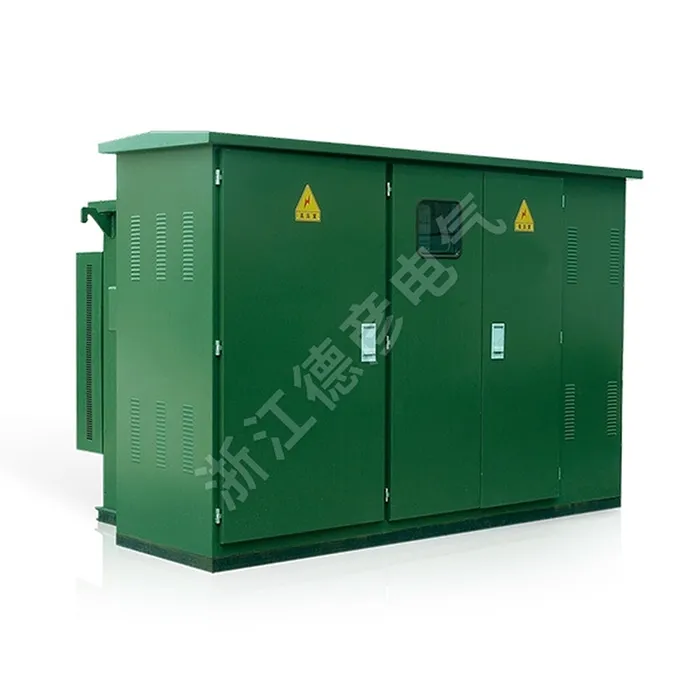
2. American-style Box Substation (Prefabricated Integrated Type)
It features a shared tank structure where load switches, fuses and the transformer core are housed in one oil-filled tank. With an ultra-compact footprint, it suits space-limited sites such as street lighting, green belts and temporary construction power supplies. Restricted by its shared-tank design, it can only adopt oil-immersed transformers and is not recommended for locations with strict fire protection standards.
3. Intelligent Box Substation
Developed on the basis of European or American-style box substations, it is equipped with modules including DTU/FTU units, temperature & humidity sensors, metering devices and fault indicators. It realizes the four remote control functions (remote measurement, remote signaling, remote control and remote regulation) as well as unattended remote operation and maintenance. It is a functionally upgraded variant rather than an independent structural category.
II. Core Advantages and Application Scenarios
Five Core Advantages
● Land occupation is only 1/3 to 1/5 of that of traditional substations; ● Factory prefabrication guarantees consistent assembly quality; ● Flexible configuration and integral relocability; ● Complete protective functions including five-prevention interlocks, temperature-controlled ventilation and anti-condensation dehumidification systems; ● Cabinets can be made of steel plate, stainless steel or aluminum alloy, adapting to harsh environments such as coastal high salt fog, high altitude and frigid cold areas.
Typical Application Scenarios
Urban and rural power distribution, municipal road lighting, industrial and commercial parks, new energy grid connection, temporary power supply, rural power grid renovation and transportation infrastructure.
III. Key Points for Selection & Operation and Maintenance
Five Essential Factors for Type Selection
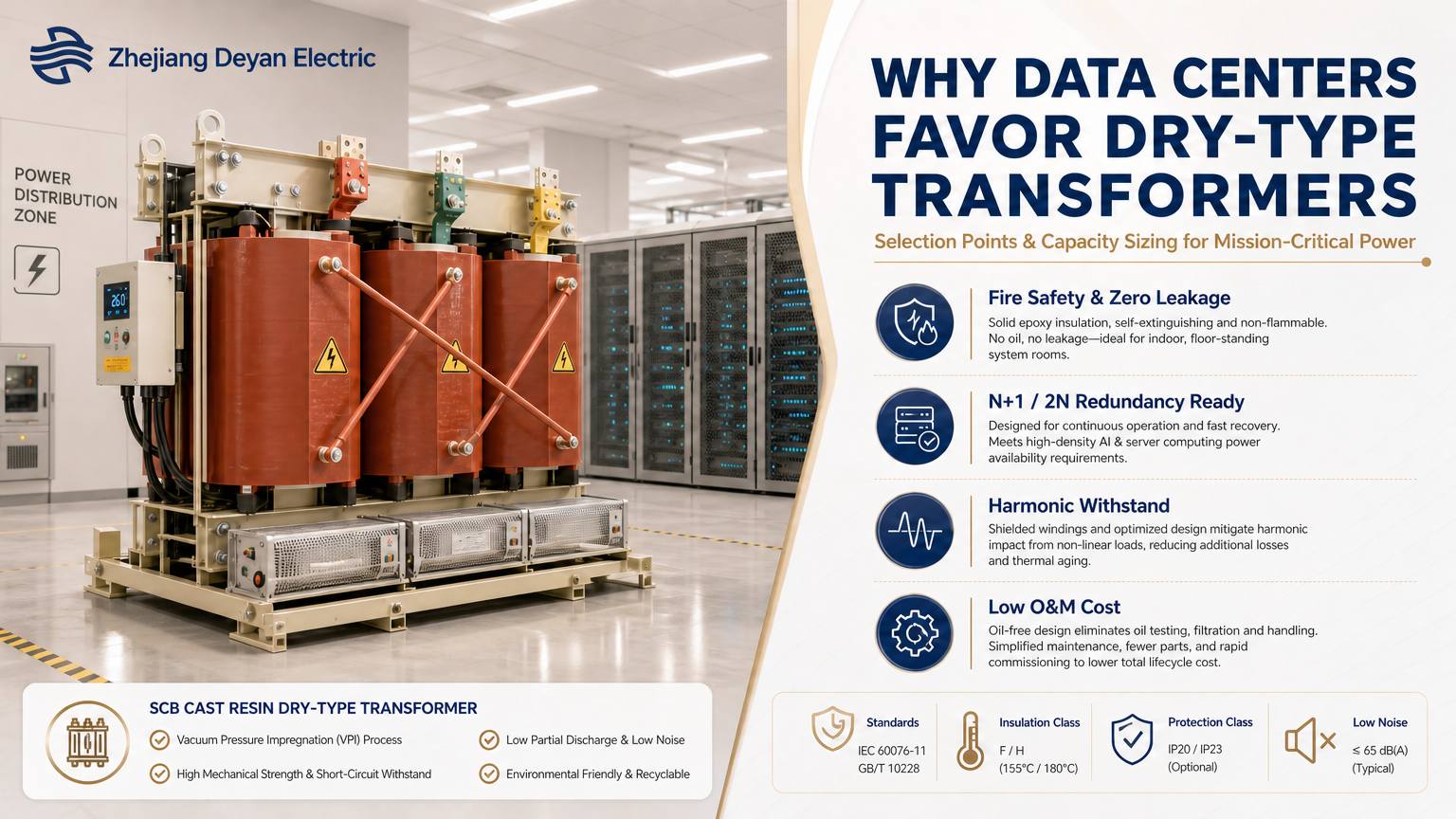
1. Match capacity with calculated load and reserve 15%--25% margin for future capacity expansion; 2. Verify environmental conditions including ambient temperature, altitude, pollution class and seismic resistance requirements; 3. Select transformers according to structural type: dry-type transformers are optional for European-style units to meet fire safety standards; S13 or higher energy efficiency transformers are prioritized for energy-saving projects; 4. Plan incoming/outgoing wiring modes, outgoing circuits, dual power supply, reactive power compensation and metering configurations; 5. Determine the grade of intelligent configuration based on operation & maintenance modes and project budget.
Five Critical Priorities for Operation & Maintenance
1. Visual environmental inspection: check cabinet corrosion, foundation settlement, water accumulation and blocked drain holes; 2. Inspect temperature control, ventilation and anti-condensation systems; 3. Fasten all electrical connections; regularly conduct insulation tests, power frequency withstand voltage tests and grounding resistance tests (ground resistance ≤ 4 Ω); 4. Transformer body maintenance: for oil-immersed transformers, check oil levels and leakage, and perform regular oil sample analysis; for dry-type transformers, remove accumulated dust and inspect casting cracks; 5. Verify data from intelligent terminals, test alarm functions and calibrate protection setting values.
Conclusion
For equipment selection, emphasis shall be placed on load matching, environmental verification, structural type selection, expansion planning and intelligent configuration. A standardized operation and maintenance system covering cabinet appearance, temperature control systems, electrical connections, transformer bodies and intelligent terminals shall be established to ensure long-term safe and stable operation of the equipment.
We use cookies to offer you a better browsing experience, analyze site traffic and personalize content. By using this site, you agree to our use of cookies. Privacy Policy