Blog

Can a Box-Type Substation Run Unattended?

2026-09-29 0 Leave me a message

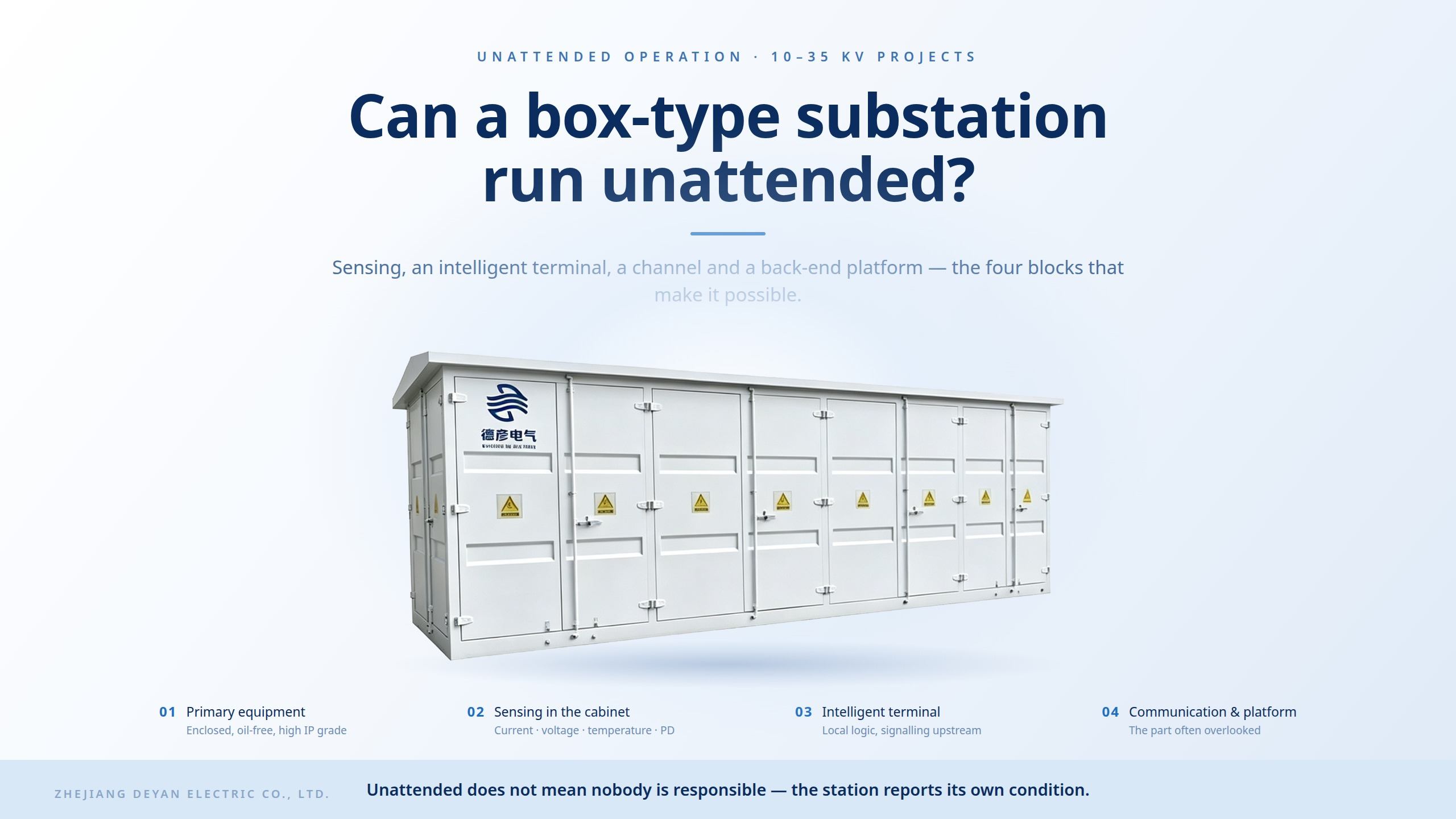
Distribution rooms and compact substations are increasingly expected to run without a permanent operator on site. The question is no longer whether the equipment can do it, but what the station needs around it — sensing, an intelligent terminal, a communication channel and a back-end platform, all planned from the start. A station that is "smart" only on paper will still need daily visits.

I. What Unattended Operation Actually Means

Unattended does not mean nobody is responsible. It means the station reports its own condition: real-time remote upload of operating data, automatic fault alarming and positioning, remote closing and opening control, and early warning of abnormal conditions such as joint overheating, internal insulation defects or low gas pressure in gas-insulated models. Operating staff then carry out scheduled inspection and maintenance rather than sitting on site — which is exactly why this model has become a mainstream requirement in urban grid renovation, park distribution, photovoltaic and energy storage stations, and rail transit projects.

II. The Four Building Blocks

1. Primary Equipment That Survives Without Daily Attention

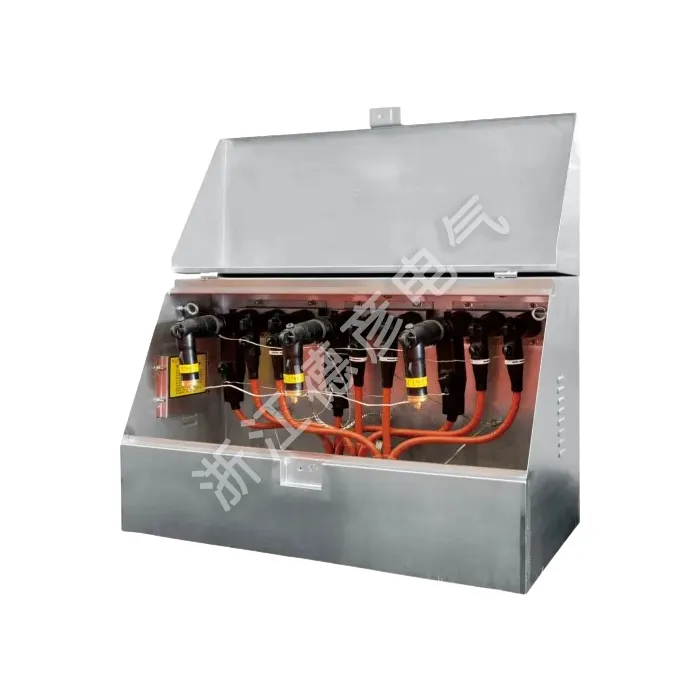
Fully enclosed, oil-free whole-station operation and a high protection grade keep rain, dust, moisture and coastal salt fog out of the cabinet. Box-type substations built with aluminum-zinc steel plate cabinets and container manufacturing techniques also offer full enclosure and mobility, so the station can be relocated if the project layout changes.

2. Sensing Inside the Cabinet

Current and voltage sensors, temperature sensing units and partial discharge monitoring units are embedded in the primary equipment; gas-insulated models additionally monitor gas chamber pressure.

3. An Intelligent Terminal as the Local Processing Unit

An external intelligent distribution terminal collects the signals, performs local logic and communicates with the back-end system.

4. Communication and a Back-End Platform

Data upload, alarming and remote switching control require a communication channel and a monitoring platform on the customer side. This is the part most often overlooked when equipment is procured separately from the automation system.

III. What Primary-Secondary Integration Changes

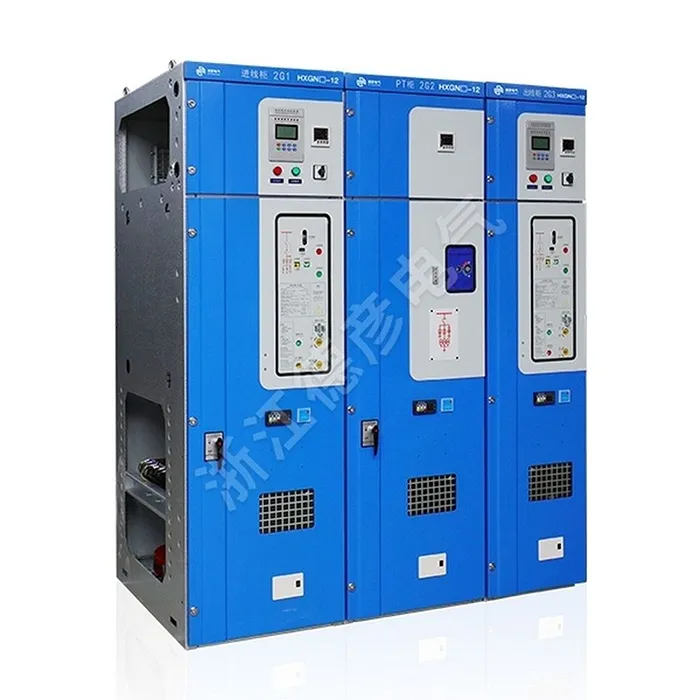
Traditional cabinets perform primary switching functions only and do not adapt to new-type power systems. Primary-secondary integration embeds sensors and monitoring units inside the cabinet and matches them with an external intelligent distribution terminal, so the complete system can realize real-time remote data upload, automatic fault location, reporting and segment isolation, remote closing and opening control, and early warning of joint overheating and internal insulation defects. It is the practical carrier for distribution automation, and is widely matched with new energy box substations and smart urban power distribution networks.

Note: intelligent distribution terminals and monitoring components are purchased auxiliary parts. Deyan Electric is responsible for cabinet structural design, primary equipment assembly, wiring integration and overall commissioning before delivery.

IV. What to Confirm Before Specifying

Define the function list first — which signals must be monitored and which operations must be controllable remotely — rather than simply ordering a "smart cabinet". Confirm the site's communication conditions and the customer's back-end platform. Check environmental conditions, including indoor or outdoor installation, humidity, dust, salt fog, required protection grade, and any requirement for oil-free operation or eco-friendly gas insulation. Verify electrical parameters: rated voltage within the 10–35kV range, rated current, short-circuit breaking current, transformer capacity and coordination of protection settings between upper and lower switches. Finally, obtain valid type test reports and qualification documents, keep the scheme within stably mass-producible cabinet models, and draw a clear line between the cabinets supplied and the intelligent components purchased separately.

About Zhejiang Deyan Electric Co., Ltd.

Zhejiang Deyan Electric Co., Ltd., located in the Economic Development Zone of Yueqing City, Zhejiang Province, specializes in the R&D, production and service of industrial electrical appliances. Its core products include box-type substations, ring main units, gas-insulated switchgears, prefabricated cabins, photovoltaic step-up box substations, high and low voltage switch cabinets and cable branch boxes, serving urban grid upgrading, industrial park distribution, distributed PV stations, energy storage and rail transit. The company supports customized primary schemes, integrated assembly and factory commissioning. To plan primary-secondary integrated equipment for an unattended station, please contact Deyan Electric.

Can a Box-Type Substation Run Unattended?

Related News
Leave me a message
X
We use cookies to offer you a better browsing experience, analyze site traffic and personalize content. By using this site, you agree to our use of cookies. Privacy Policy
RejectAccept