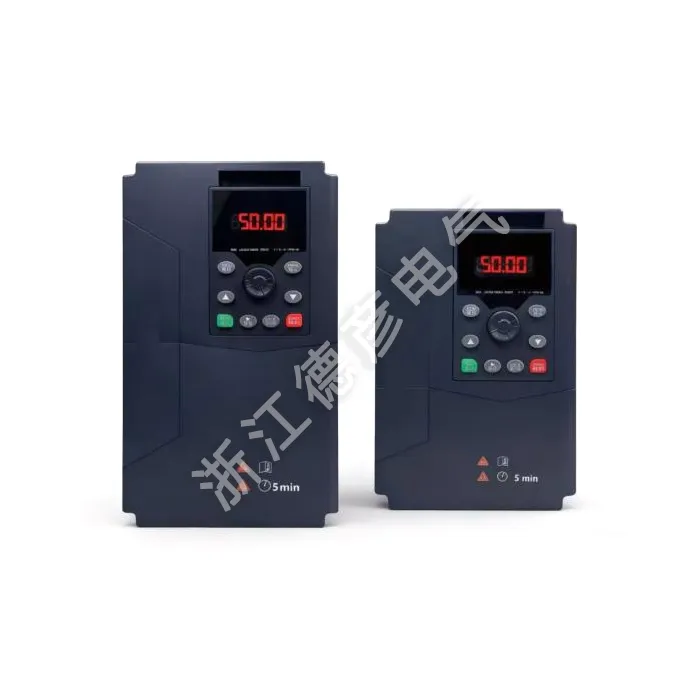
Variable Frequency Drive for Asynchronous Motor Control
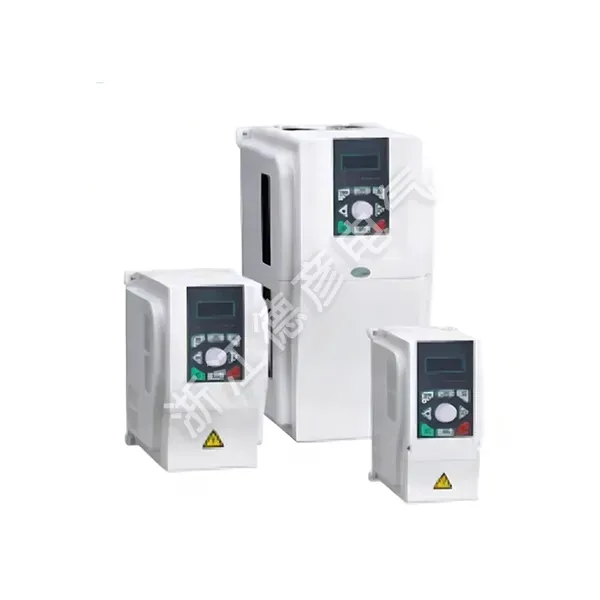
Deyan Electric – a China-based supplier with over a decade of field experience – offers the Variable Frequency Drive for Asynchronous Motor Control, engineered to solve real-world production headaches. Whether you're battling frequent overload trips, high energy bills, or compatibility issues with older motors, this drive brings tangible relief. With a power range covering 0.75kW to 400kW and a dedicated DSP core, it delivers 150% starting torque at 0.5Hz. More than 8,000 units are already cutting downtime in European and American factories. This is not just another VFD; it's a solution born from listening to plant managers and maintenance teams.
The real cost of ignoring motor-drive mismatch
Many plants purchase a variable frequency drive based solely on power rating, assuming any drive will work with any motor. That assumption often leads to chronic issues: motor humming, excessive heating, poor speed regulation at low frequencies, and even premature bearing failure. The Variable Frequency Drive for Asynchronous Motor Control tackles this head-on with its auto-tuning feature. During commissioning, the drive performs a static or rotating self-identification of the motor's stator resistance, leakage inductance, and magnetizing curve. This data is then used to fine-tune the torque compensation and slip compensation parameters, ensuring the drive and motor operate as a matched pair.
From the field: A German packaging machinery manufacturer reported a 40% reduction in motor temperature rise after switching to this drive, simply because the auto-tuning corrected the voltage/frequency ratio that their previous generic drive got wrong. Lower temperature means longer insulation life and fewer rewinds.
Beyond thermal benefits, the right match also improves speed stability. With a speed regulation accuracy of ±1% and a range of 1:100, this drive maintains consistent throughput even when line voltage fluctuates or load changes suddenly. That's critical for processes like extrusion, wire drawing, and web handling where speed variation directly affects product quality.
Five questions every buyer should ask (and our answers)
Based on hundreds of conversations with procurement teams, we've distilled the most common questions that separate a good purchase from a regretful one. Here's how the Variable Frequency Drive addresses each.
1. “Will this drive work with my old 380V motor that has high slip?”
Yes. The slip compensation feature dynamically increases output frequency to maintain set speed under load. You can adjust the compensation gain to match the motor's slip characteristic, even for motors with unknown nameplate data.
2. “Can I integrate it with my existing PLC without reprogramming everything?”
Absolutely. The built-in RS485 port uses standard Modbus RTU, compatible with most PLCs and SCADA. We also provide a detailed register map and example ladder logic for Siemens, Allen‑Bradley, and Mitsubishi systems.
3. “What happens if my motor overloads – will the drive trip and shut down the whole line?”
Instead of immediate tripping, the drive's stall prevention mechanism reduces output frequency temporarily to lower the current, giving the motor a chance to recover. Only if the overload persists beyond the thermal limit (150% for 60 seconds in G-type) does it trip safely, protecting both motor and drive.
4. “How do I handle frequent starts and stops without damaging the drive?”
The S-curve acceleration/deceleration and DC braking functions are designed for high-cycle applications. You can set separate accel/decel times (0.1–6500s) and adjust the braking current to match the inertia, minimizing mechanical stress.
5. “Is the spare parts availability guaranteed for at least 5 years?”
Deyan Electric commits to a 7-year spare parts support policy for all LNC820 series drives. We stock critical components like IGBT modules, control boards, and fan assemblies in our regional warehouses.
Beyond speed control: three unexpected benefits
When you purchase a Variable Frequency Drive, you're not just buying the ability to change motor speed. You're investing in operational intelligence that pays dividends in ways you might not anticipate.
Energy intelligence
The drive's automatic energy-saving mode monitors the motor's load current and reduces excitation voltage when the load is light. For fan and pump applications, this can cut energy consumption by 25–35% compared to fixed-speed operation. Even for constant-torque loads, the optimized V/F curve reduces copper losses.
Predictive maintenance data
Through the RS485 interface, the drive provides real-time data on output current, voltage, frequency, DC bus voltage, and module temperature. By trending these parameters, you can detect bearing wear or motor imbalance before they cause breakdowns – a feature that maintenance teams love.
Process flexibility
With 16 preset speeds and simple PLC functionality, you can automate complex sequences without adding a separate controller. For example, a mixing process can run at high speed for 5 minutes, slow for 2 minutes, then stop – all programmed directly into the drive.
Choosing the right V/F curve: not as simple as you think
Most drive manuals mention three V/F curves: linear, multi-point, and square-law. But selecting the right one for your application is where experience matters. The Variable Frequency Drive for Asynchronous Motor Control offers all three, plus a complete V/F separation mode for special applications like synchronous motors or test benches.
|
Curve type
|
Best for
|
Why it works
|
Common mistake
|
|
Linear
|
Constant torque (conveyors, positive displacement pumps, extruders)
|
Voltage rises proportionally with frequency, maintaining constant flux.
|
Using it on fan loads, which over-magnetizes the motor at low speeds.
|
|
Multi-point
|
Centrifuges, dehydrators, or loads with variable torque at low speeds
|
You can set up to three breakpoints to customize the voltage profile.
|
Setting breakpoints without measuring actual load torque – leads to poor efficiency.
|
|
Square-law
|
Fans, pumps, blowers (variable torque)
|
Voltage follows the square of frequency, matching the load's cubic torque requirement.
|
Applying it to constant-torque loads, causing insufficient torque at low speeds.
|
|
V/F separation (full)
|
Test stands, synchronous motors, or when you need independent voltage control
|
Output voltage and frequency are set separately, giving maximum flexibility.
|
Not using proper voltage limits, risking motor saturation.
|
Our technical team often helps customers re-select the curve based on actual motor current measurements. A simple change from linear to square-law on a 75kW pump saved a water treatment plant 18% on electricity annually – without any hardware modification.
Communication: the feature you'll use more than you think
Many buyers treat RS485 as a checkbox item, but in practice, it becomes the backbone of plant-wide monitoring. The Variable Frequency Drive comes with Modbus RTU as standard, supporting baud rates up to 115200 bps. But we've gone a step further: the drive also supports a simple frequency source switching via communication, so you can change setpoints from a central control room without physical wiring. Additionally, the drive logs the last five fault records with time stamps and operating parameters at the moment of fault – invaluable for root-cause analysis.
Real scenario: A dairy plant in the UK integrated 23 of these drives into a single RS485 network. Their maintenance team now remotely monitors motor currents and receives alarm notifications via email when any drive exceeds 90% of its rated current. This proactive approach reduced unscheduled downtime by 62% over six months.
For advanced users, the drive's pulse output terminal can be configured to output a frequency proportional to motor speed, which can be fed into a counter or a PLC for closed-loop speed control without an external encoder.
Protection that works when you're not watching
Every inverter has overload protection, but not all protections are created equal. The Variable Frequency Drive features a fast current-limiting circuit that responds within microseconds to prevent overcurrent trips during sudden load spikes. Unlike standard drives that simply trip and require manual reset, this drive's intelligent stall control reduces output frequency to bring the current back within safe limits, then automatically resumes normal operation. This is particularly valuable in applications like crushers or punch presses where momentary load peaks are common.
• Motor short-circuit detection upon power-on – checks for winding insulation faults before the motor starts, preventing catastrophic damage.
• Output phase-loss protection – if one phase of the motor cable breaks, the drive trips within 2 seconds to avoid single-phase heating.
• Over-voltage stall control – during deceleration, the drive extends the deceleration time automatically if the DC bus voltage rises too high, preventing tripping and saving the brake resistor.
• Thermal protection with I²t calculation – monitors the motor's thermal state based on current and frequency, providing more accurate overload protection than simple current threshold.
We've seen cases where these protections saved motors worth thousands of dollars – one customer in the steel industry avoided a motor burnout when a conveyor jammed, because the drive limited the current and stopped safely.
How to select the right model for your motor (without guesswork)
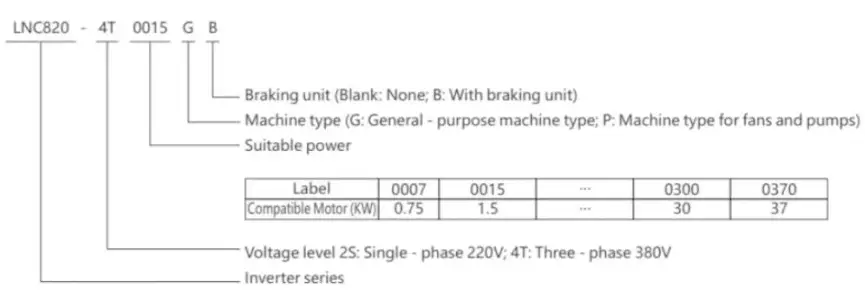
Choosing the correct frame size and power rating is the most common source of anxiety for new buyers. The Variable Frequency Drive for Asynchronous Motor Control is available in two types: G-type (heavy-duty) and P-type (light-duty). The rule of thumb: for constant torque loads (conveyors, mixers, hoists), choose G-type with an overload capacity of 150% for 60 seconds. For variable torque loads (fans, pumps, compressors), choose P-type with 130% overload.
But there's more: you also need to consider the motor's rated current, not just its kW rating. A 75kW motor may draw 140A at full load, but if the drive's rated current is 150A, you have some margin. We recommend that the drive's continuous current be at least 10% higher than the motor's nameplate full-load current to accommodate voltage dips and minor overloads. For motors operating at altitudes above 1000m or ambient temperatures above 40°C, derating is required – our sales engineers can provide detailed derating tables.
To simplify, Deyan Electric offers a free selection service: send us your motor nameplate photo and application description, and we'll recommend the exact model and provide parameter settings for your specific use case.
What plant managers say after switching
We've collected feedback from over 200 customers who replaced their old drives with the Variable Frequency Drive. The most common themes: quieter operation, fewer nuisance trips, and much easier parameter setting because the keypad is intuitive with 8 function keys and a 5-digit LED display.
“We had a line that would trip at least twice a shift due to overcurrent. Since installing these drives, we've had zero tripping in three months. The auto-stall prevention is a game-changer.” – Maintenance manager, automotive parts factory, USA.
“The built-in PID saved us from buying a separate controller for our pressure regulation. We set it up in 15 minutes and the pressure is now stable within ±0.5 bar.” – Project engineer, water utility, Australia.
“I was skeptical about the energy savings, but after one month, our electricity meter showed a 22% reduction on our pump station. The payback period is less than a year.” – Facility director, food processing plant, Netherlands.
Frequently asked questions
Q: Can this drive be used with a motor that has a built-in thermal switch?
A: Yes. You can connect the thermal switch (normally closed) to one of the digital inputs, which can be programmed as an external fault input. When the thermal switch opens, the drive will trip and display a fault code, protecting the motor from overheating.
Q: What is the difference between V/F control and vector control? Does this drive support vector?
A: This drive uses advanced V/F control with torque and slip compensation, which provides performance close to sensorless vector control in many applications. While it does not offer full vector control, the compensated V/F is simpler to set up and more robust against parameter variations, making it ideal for general-purpose motor control where extreme low-speed torque is not required.
Q: How do I reset the drive to factory defaults if I mess up the parameters?
A: You can restore factory settings via parameter P00.18 (restore parameters) – set it to 1, and the drive will reset all parameters to default. This is useful for troubleshooting or when you want to start fresh.
Q: Is the braking unit included in all models, or do I need to order it separately?
A: For models of 22kW and below, the braking unit is built-in as standard. For 30kW and above, an external braking unit and resistor are recommended and can be ordered as accessories. The drive provides terminals for external braking connection.
Q: What kind of warranty and after-sales support do you offer for international customers?
A: We provide a 24-month warranty covering manufacturing defects. For international customers, we have authorized service partners in several European and American regions, and we also offer remote diagnostics and replacement parts shipping within 48 hours for critical cases.
Ready to eliminate the headaches of motor control? Request a sample unit and let our engineers help you select the perfect match for your asynchronous motor. Deyan Electric – where experience meets innovation.