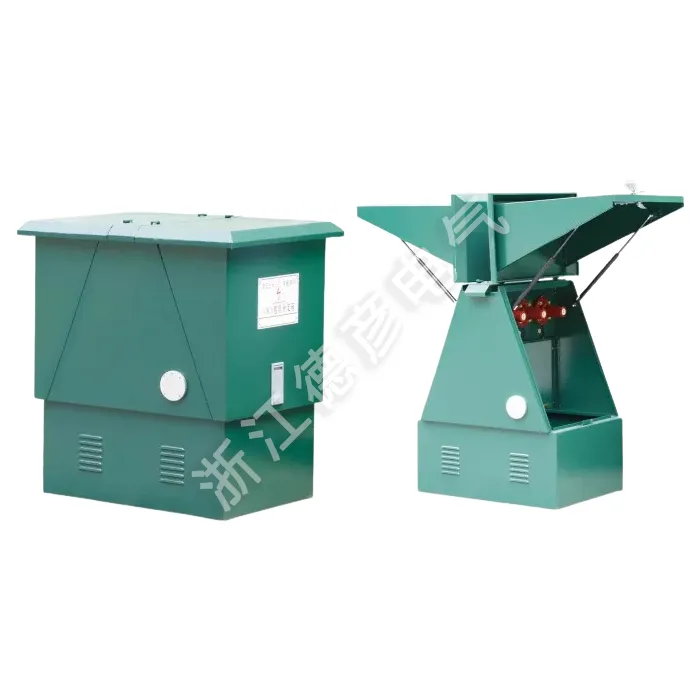
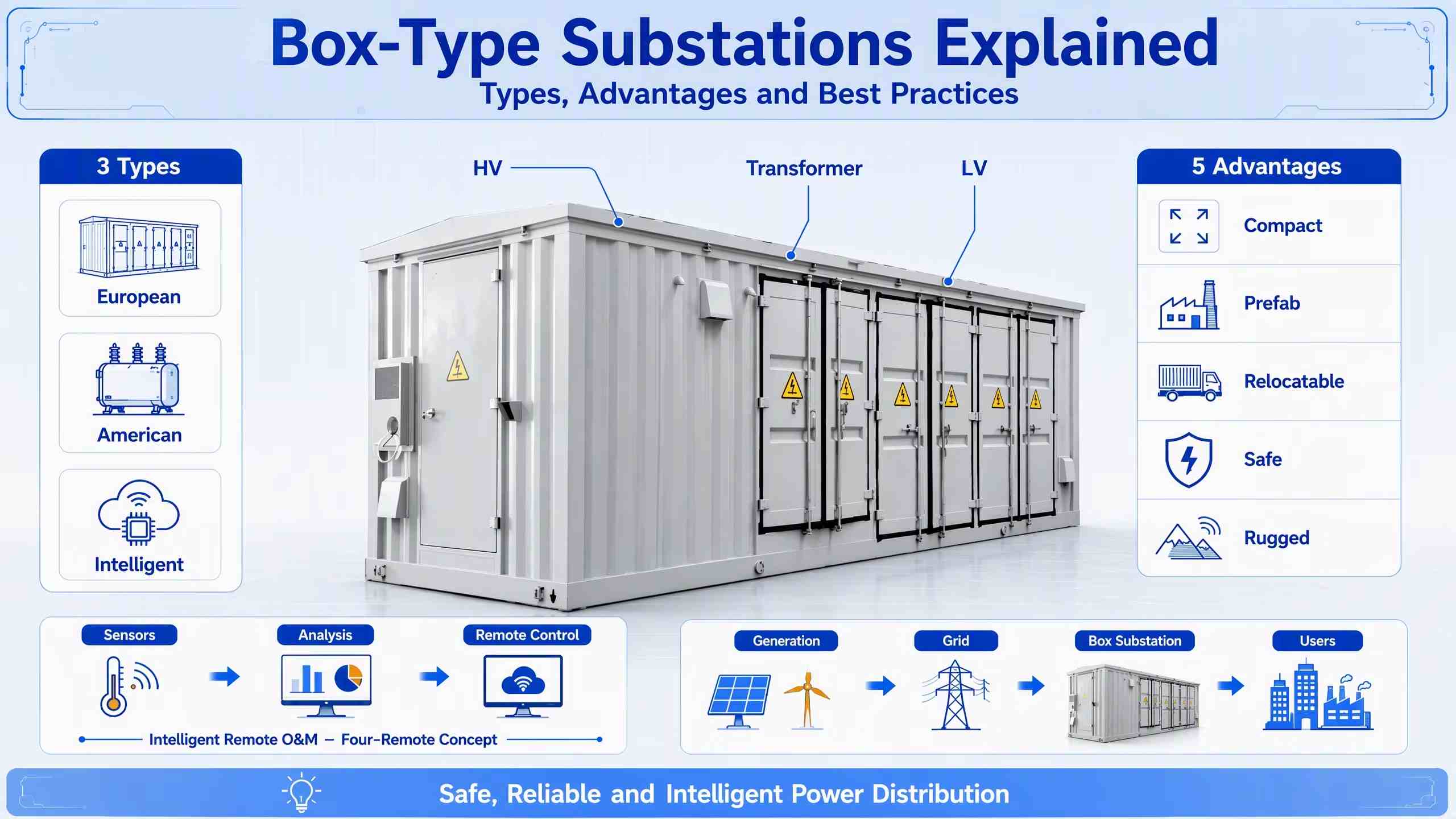
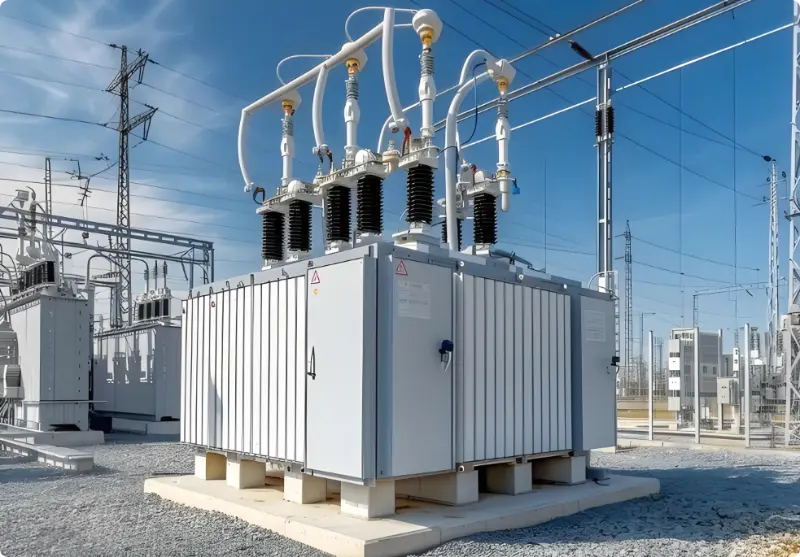
American-style and European-style prefabricated substations exhibit distinct differences in design and application, each suited for different scenarios. The American-style substation, also known as an American-style prefabricated cabin, is a power distribution unit that integrates high-voltage switchgear, transformers, and other equipment into a single enclosure. Typically employing load switches and current-limiting fuses as power switches, it offers advantages such as simple structure, convenient operation, compact size, and minimal footprint. Consequently, American-style substations are widely used in the construction and renovation of urban distribution grids, as well as in locations with stringent space constraints, such as commercial districts and residential areas.
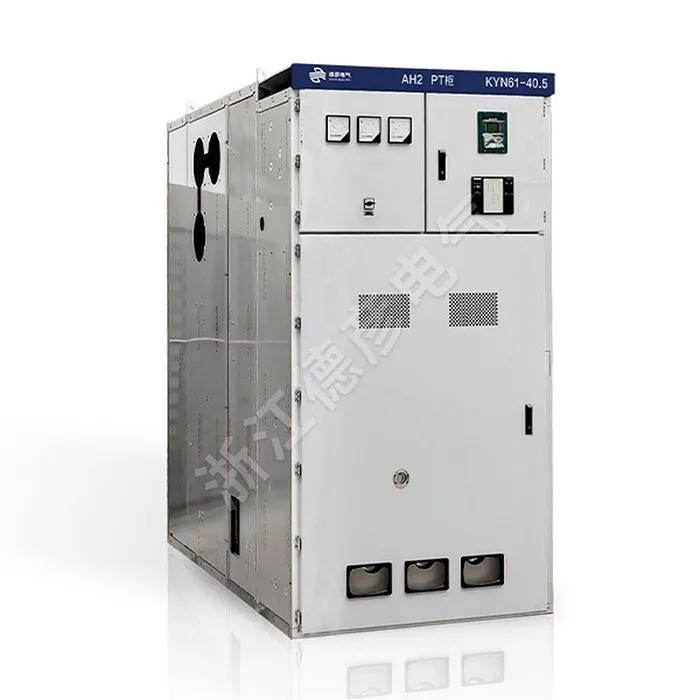
In contrast, European-style substations are power transformation equipment where high-voltage switchgear and transformers are arranged separately. It generally consists of a transformer, high-voltage switchgear, and low-voltage switchgear, interconnected via cables or other transmission media. While European-style substations feature a more traditional design with relatively complex structures, they offer greater flexibility and adaptability to meet diverse user requirements. They are widely deployed in locations demanding higher equipment performance, such as industrial facilities and residential communities requiring high-voltage power supply. Additionally, American-style and European-style substations differ in their suitable applications.
American-style substations are ideal for locations with limited space requirements, such as commercial districts and residential areas, due to their compact structure and small footprint. European-style substations, however, are better suited for environments demanding higher equipment performance, like industrial zones and ports, as their traditional design accommodates diverse user needs. In summary, American and European-style substations exhibit distinct differences in design and application, each suited for specific environments. When selecting a substation type, comprehensive consideration of actual conditions is essential to ensure the chosen solution meets operational requirements. The fundamental characteristics of both substation types are outlined below.
01 Differences Between American and European-Style Substations
1. American-Style Substation:
(1) Wiring Configuration
One or two 10kV incoming lines; single transformer unit, typically rated at 500kVA to 800kVA; 4 to 6 low-voltage outgoing cables.
(2) Main Components
Comprises a transformer, 10kV ring main unit (RMU), 10kV cable plugs, and low-voltage terminal boxes. It offers advantages such as compact size, low cost, and ease of installation.
(3) Advantages and Disadvantages of American-Style Prefabricated Substations
1) Advantages: Compact size with minimal footprint, easy placement and concealment, and seamless integration with residential environments. Reduces low-voltage cable length, lowers line losses, and decreases supporting infrastructure costs.
2) Disadvantages: Lower power supply reliability; lacks motorized mechanisms, preventing installation of distribution automation devices; Lack capacitor banks, hindering line loss reduction; Higher noise levels compared to Type III and Type V substations, as these house transformers indoors for sound insulation; Additionally, they disperse the concentrated electromagnetic radiation of Type III/V substations into multiple points; Different civil engineering foundations for varying capacity substations complicate capacity upgrades; When the substation overloads or users require capacity expansion, reconstruction of the civil structure is required, leading to extended power outages and increased project complexity.
2. European-style Substation:
(1) Wiring Configurations
a. Single-transformer configuration—Two 10kV feeders; single-transformer capacity typically ranges from 500kVA to 800kVA; low-voltage output cables generally number 4 to 6.
b. Dual-Transformer Configuration—Two 10kV feeders; two transformers, each with a capacity of 500kVA to 800kVA; typically 8 to 12 low-voltage output cables.
(2) Main Components of Box-Type Substations
Comprising transformers, 10kV ring main units, low-voltage capacitors, and low-voltage switches, these units compactly integrate Type III substation equipment within a metal enclosure, achieving miniaturization. European-style box-type substations are larger in volume and higher in cost compared to American-style counterparts.
(3) Advantages and Disadvantages of European-Style Box-Type Substations
1) Advantages: Noise levels comparable to Type III and Type I substations; lower electromagnetic radiation than American-style substations due to transformer enclosure within a metal cabinet providing shielding; supports distribution automation systems, combining the benefits of Type III/I substations with key advantages of American-style substations.
2) Disadvantages: Larger footprint complicates installation and may impact residential area layout;
02 Applications of American-Style and European-Style Box Transformers
Due to structural differences, box transformers are suited for distinct applications and power supply networks. Their varying reliability stems from differing designs, resulting in distinct suitability for specific scenarios. When smaller-capacity American-style substations are selected for large residential complexes, the number of substations required increases significantly. This leads to more load connection points on overhead lines. Reducing these connection points necessitates adding more substations in series, weakening the network structure. To overcome the structural weakness caused by small-capacity substations, a ring network configuration is the optimal solution.
1. Suitable Applications for American-Style Box Transformers
Given their structural characteristics and pros/cons, American-style box transformers are suitable for multi-story residential buildings and other non-critical structures with relatively low power supply requirements. Based on practical experience, pairing American-style box transformers with small ring network switchgear fully meets the power needs of multi-story residential buildings. Even if a box transformer fails, the impact on residents is minimal. However, they are unsuitable for low-rise and high-rise buildings.
2. Suitable Applications for European-Style Box Transformers
European-style box transformers are suitable for multi-story residential buildings, low-rise high-rises, high-rises, and other more critical structures.
Both American-style and European-style box transformers have various drawbacks. However, with the advancement of science and technology, the continuous application of new technologies such as distribution automation and capacitor compensation in box transformers will undoubtedly make them the preferred solution in power supply systems.
We use cookies to offer you a better browsing experience, analyze site traffic and personalize content. By using this site, you agree to our use of cookies. Privacy Policy