China Cable Junction Box for Industrial Park Applications Manufacturer, Supplier, Factory
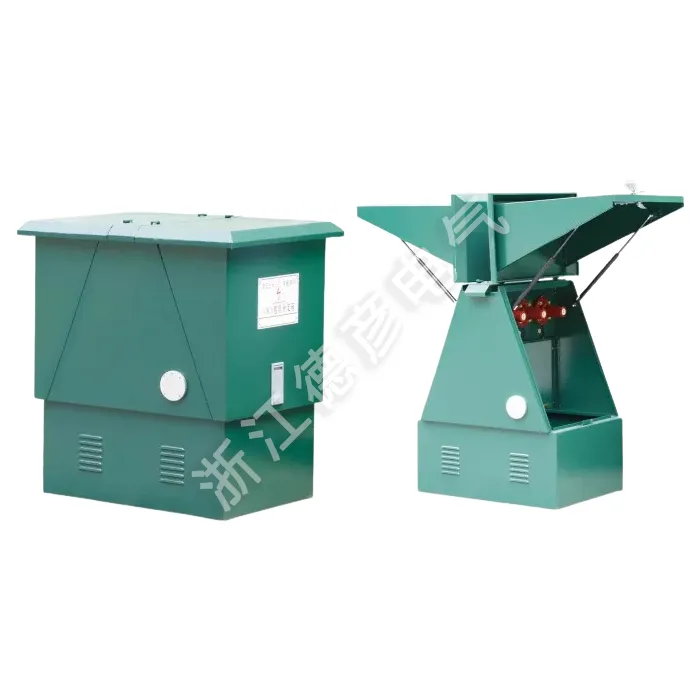
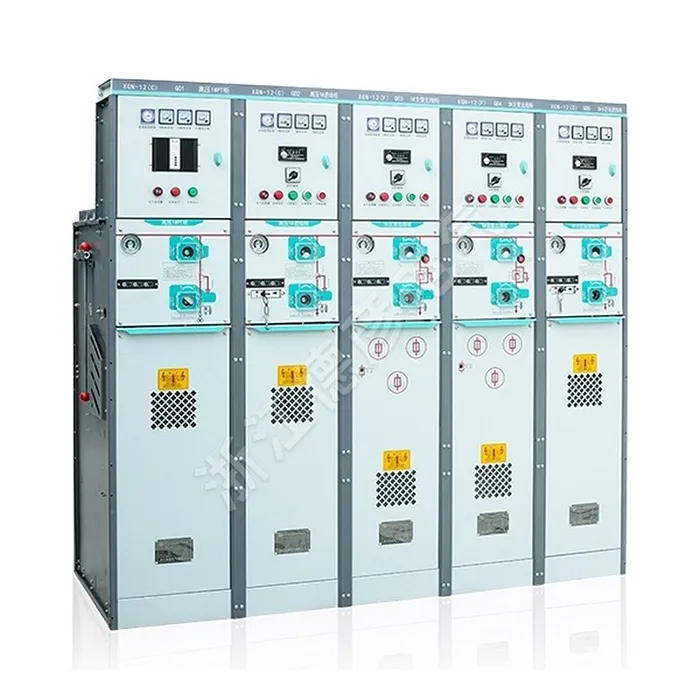
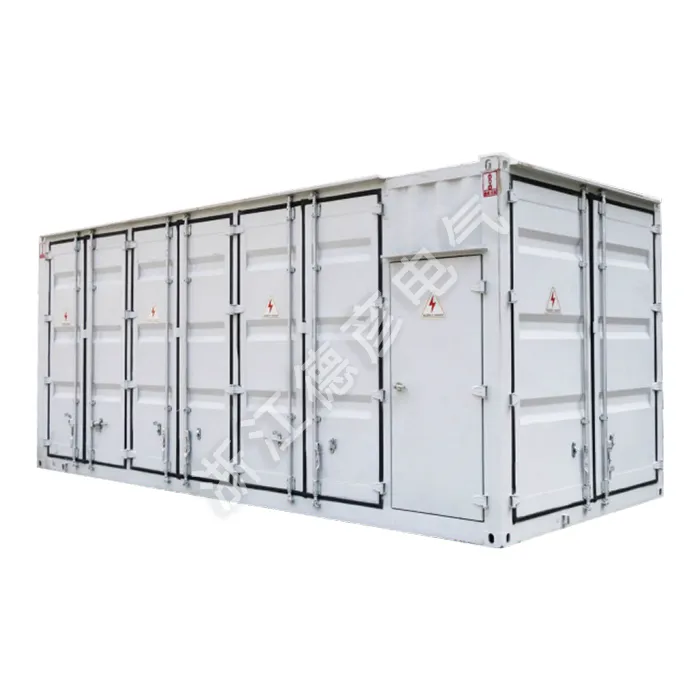
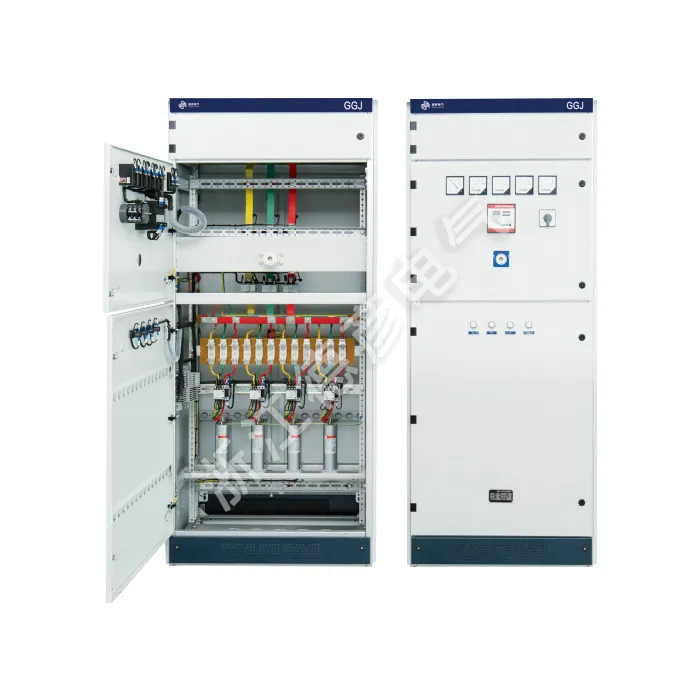
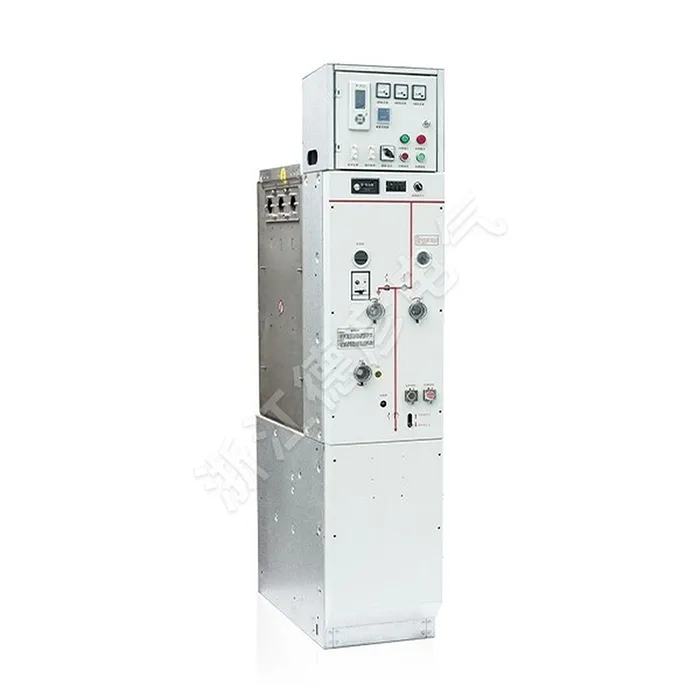
Industrial park power distribution rarely follows a clean blueprint. Loads shift as tenants expand, cable routes cross under roads and between buildings, and maintenance windows are short because downtime stops production. This Cable Junction Box for Industrial Park Applications from Deyan Electric is built around those realities. As a manufacturer with integrated R&D, production, and service, we use butt-welded sleeve connectors and a dual-opening door structure so that cable branching stays organized, protected, and serviceable. The box complies with DIN 47636 joint standards and supports bolted cable joints rated at 630A, making it a practical fit for 12kV industrial distribution networks that need to keep running without constant attention.
Park Distribution Pain Points
Industrial parks are not single buildings with predictable loads. They are collections of factories, warehouses, offices, and utility rooms, each with its own demand pattern. Cable branches multiply quickly, and once buried or routed through trenches, changing them becomes expensive. The following issues appear again and again in park electrical rooms.
1. Late-stage branch additions force disruptive cable rerouting and extended outages across multiple tenants.
2. Unsealed cable entries let dust and condensation reach contact points, raising voltage drop and heating risk.
3. Crowded internal layouts trap heat and make fault tracing slow when production cannot wait.
4. Inconsistent joint quality from on-site wrapping creates unpredictable performance across the park.
5. Limited maintenance access turns a simple inspection into a half-day job because doors only open from one side.
These pain points are why the branching point itself matters more than it first appears. A well-designed Cable Junction Box for Industrial Park Applications keeps cables organized for future changes, protects joints from moisture and dust, and allows inspection without dismantling the entire connection.
Junction Box vs. RMU
Not every industrial park distribution point needs the same equipment. A ring main unit (RMU) provides switching and fault isolation, but it costs more and takes up more space. For park layouts with relatively stable load patterns and no frequent switching requirement, a cable junction box is often the more efficient choice. The table below compares the two approaches in the context of industrial park applications.
|
Comparison Item
|
European-style Cable Junction Box
|
Ring Main Unit (RMU)
|
|
Primary function
|
Cable branching, connection, and distribution
|
Load switching, fault isolation, and protection
|
|
Switching capability
|
No integrated switching (connection only)
|
Integrated load break switch or circuit breaker
|
|
Footprint
|
Compact, modular enclosure
|
Larger, requires dedicated switch room or pad
|
|
Typical cost level
|
Lower equipment and installation cost
|
Higher initial investment
|
|
Maintenance need
|
Maintenance-free under normal conditions
|
Periodic inspection of switching mechanisms
|
|
Best fit in industrial parks
|
Stable-load branching points, terminal distribution
|
Ring network nodes requiring frequent switching
|
In practice, many industrial parks use both: RMUs at the main ring network nodes and cable junction boxes at the terminal branching points where loads are relatively fixed. This combination saves equipment investment while maintaining switching capability where it is actually needed.
● RMU positions are reserved for future ring completion or critical switching nodes.
● Junction boxes serve terminal branching points with stable load patterns.
● Phased build-out starts with junction boxes and adds RMUs as the park grows.
Internal Layout Logic
The internal cable arrangement is where this box earns its keep over time. Three-core cables are stiff, and forcing them into tight crossings inside a cramped enclosure creates bending stress that shows up as insulation damage months later. This design keeps cable paths separated and uses a compact length that avoids large-span crossings.
● Separated cable routing reduces bending stress on three-core cables and keeps circuits traceable.
● Compact length fits tight electrical rooms and prefabricated substation enclosures.
● Butt-welded sleeve busbar connectors eliminate the need for large-span crossings that consume space and complicate future changes.
● Visible spare capacity lets technicians see whether a spare branch position exists without guessing from a tangle of cables.
For industrial parks where new tenants may need connections in previously unused directions, the organized layout means expansion work is contained and predictable.
Dual-Door Maintenance Access
Industrial park electrical rooms are rarely spacious. Technicians often work in narrow aisles with limited headroom, and they need to complete inspections quickly because production schedules leave small windows for planned outages. A single-door enclosure forces awkward access from one side; the dual-opening door design lets the technician work from both sides of the cable chamber.
1. Visual inspection of busbar connections without removing cable supports.
2. Local testing of a single circuit while adjacent circuits remain undisturbed.
3. Faster fault tracing because cables are visible from multiple angles.
4. Less risk of accidental contact with live parts during routine checks.
The Cable Junction Box for Industrial Park Applications is described as maintenance-free under normal operating conditions, which in practice means it does not require scheduled tightening, re-wrapping, or lubrication. Periodic visual checks remain good practice, and the dual-door access makes those checks faster and safer.
Protection and Standards
Industrial park environments are not clean rooms. Forklift traffic, construction dust, seasonal humidity, and occasional water pooling in cable trenches are normal. The enclosure is rated IP33, which protects against solid objects larger than 2.5mm and water spray from vertical or 60-degree angles. The internal cable connectors comply with DIN 47636 standards, and the box typically uses bolted cable joints rated at 630A.
● Dust: Prevents particles that could bridge insulation gaps or block ventilation paths.
● Moisture: Resists spray and condensation that cause contact oxidation and voltage drop.
● Impact: The high-impact resistance housing survives accidental knocks from tools or equipment.
● Corrosion: Extends service life in humid, coastal, or chemically exposed areas.
● Standard joints: DIN 47636 compliance supports compatibility with standard joint designs used across industrial distribution networks.
Sealing integrity depends on proper cable entry installation. Glands and entries should be sealed during installation to maintain the IP33 rating. This is a simple step that many site teams overlook, and it directly affects how long the box performs without issues.
Expansion and Installation
Industrial parks rarely have a final load map on day one. Warehouses become workshops, workshops add cold storage, and cold storage adds EV charging for fleet vehicles. Each change may require a new cable branch. This Cable Junction Box for Industrial Park Applications supports flexible outgoing configurations, including C-type load switch units, D-type direct cable connection units, De-type direct cable connection units with grounding switch, F-type load switch-fuse combination units, and V-type vacuum circuit breaker units.
1. Reserve branch positions during initial installation, even if they are not immediately used.
2. Label circuits clearly so future teams can identify spare capacity.
3. Keep cable entry space available for additional cables in the trench or duct.
4. Document the internal layout so modifications follow the original routing logic.
5. Confirm cable entry directions before mounting to avoid unnecessary bending during the pull.
6. Verify enclosure integrity after transport, especially if the box has been stored on site for weeks.
7. Seal cable entries properly to maintain IP33 protection once cables are installed.
8. Check door operation after mounting to ensure dual-opening access is not obstructed.
9. Complete labeling immediately after installation while the circuit layout is still clear.
Deyan Electric can provide technical documents and installation references to support the site team. For parks with existing Deyan equipment, the connection methods and labeling conventions remain consistent, which reduces the learning curve for maintenance staff.
Selection Factors
Choosing the right junction box for an industrial park starts with understanding the park's load profile and expansion plan. A park with heavy industrial tenants and frequent load changes has different needs from a logistics park with stable warehouse loads. The following factors help narrow the selection.
1. System voltage: Confirm 12kV compatibility for the park's medium voltage network.
2. Expected load per branch: Check whether 630A rated current provides sufficient margin.
3. Number of branches needed now and later: Plan for visible growth, not just current demand.
4. Joint standard required by the network operator: DIN 47636 compliance covers most industrial park specifications.
5. Installation environment: Indoor electrical room, outdoor pad, or cable trench — each affects mounting and sealing requirements.
6. Maintenance access: Confirm that the dual-opening door can be operated within the available space.
For projects with unusual requirements, Deyan Electric can review specifications and recommend a suitable configuration. The manufacturer's integrated R&D and production capability allows adjustments to enclosure dimensions, cable entry positions, and internal layout within the standard product platform.
FAQ
Q: Can this junction box be used outdoors in an industrial park?
A: Yes. With IP33 protection and a corrosion-resistant housing, it is suitable for sheltered outdoor installations such as pad-mounted positions and cable trenches. For fully exposed coastal or heavily polluted sites, additional shielding may be recommended.
Q: What cable sizes are supported?
A: The box is designed for medium voltage cables commonly used in industrial park distribution, with butt-welded sleeve connectors as busbar connections. Specific cable size compatibility should be confirmed against the project's cable schedule.
Q: Does the box include switching capability?
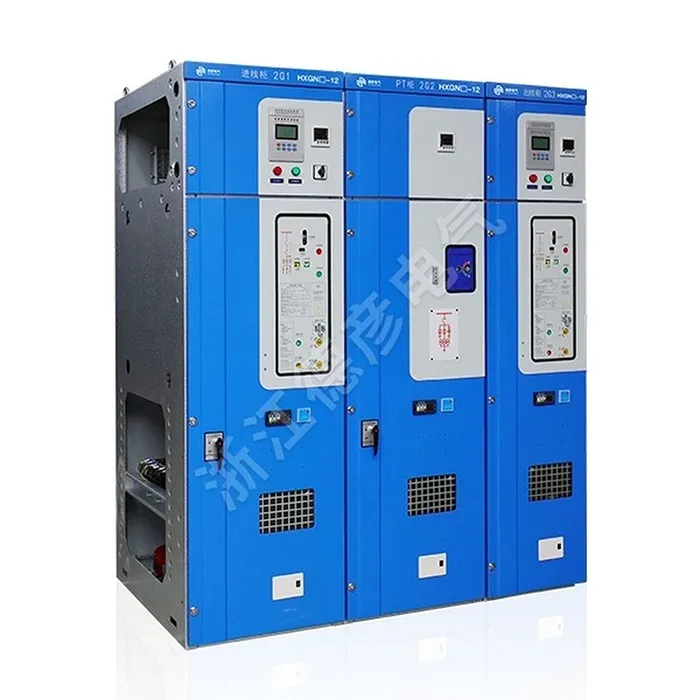
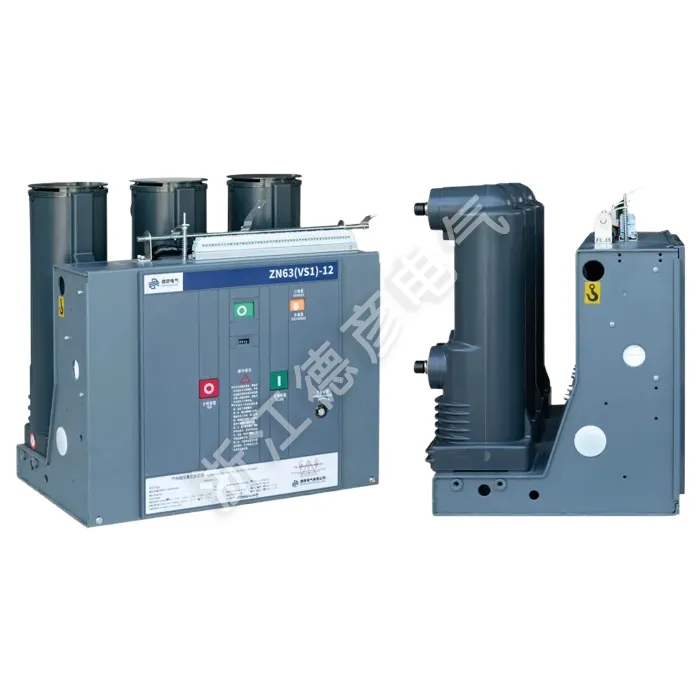
A: The standard junction box provides branching and connection, not switching. However, it supports configuration with C-type load switch units, F-type load switch-fuse combination units, and V-type vacuum circuit breaker units when switching capability is required.
Q: How is maintenance handled?
A: The unit is maintenance-free under normal operating conditions. Periodic visual inspection through the dual-opening doors is recommended. No scheduled tightening or re-wrapping is required.
Q: Can branches be added after installation?
A: Yes, if spare branch positions were reserved during the initial installation. The modular internal layout supports adding circuits without dismantling existing connections, provided cable entry space remains available.
Q: What standards does the connection system follow?
A: The internal cable connectors comply with DIN 47636 standards, typically using bolted cable joints rated at 630A. This ensures compatibility with standard joint designs used in industrial distribution networks.
Final Thoughts
Industrial park power distribution rewards foresight. A junction box that is chosen only for today's load map often becomes tomorrow's bottleneck. This Cable Junction Box for Industrial Park Applications from Deyan Electric addresses the practical realities of park environments: organized cable routing that survives expansion, dual-opening access that respects tight maintenance windows, IP33 protection that handles dust and moisture, and DIN 47636 connection compatibility that keeps the system consistent. For park operators and electrical contractors planning medium voltage distribution, it offers a stable, low-maintenance branching solution that does not need to be replaced when the park grows. Contact Deyan Electric for specifications, drawings, and project support.