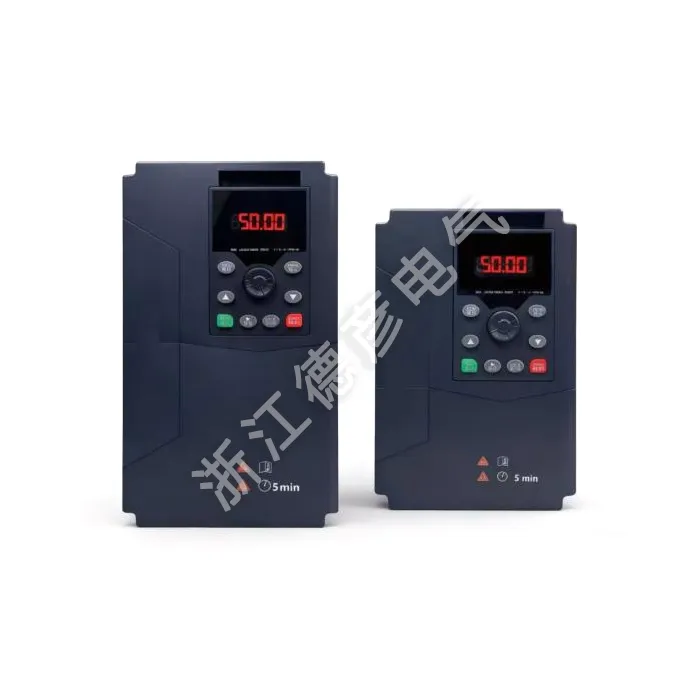
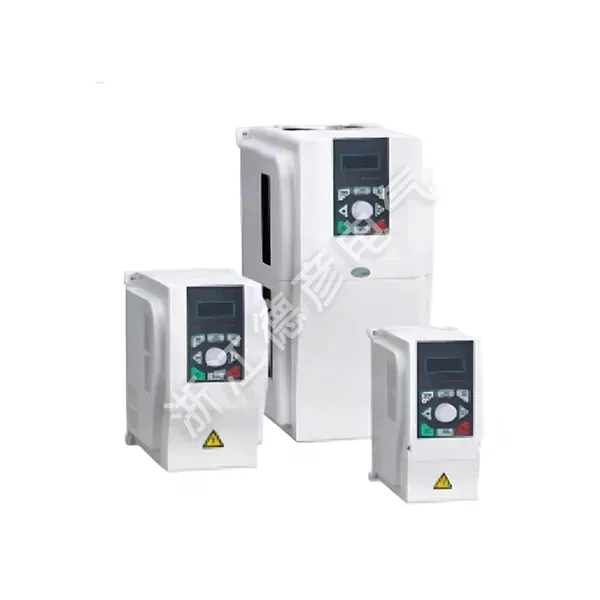
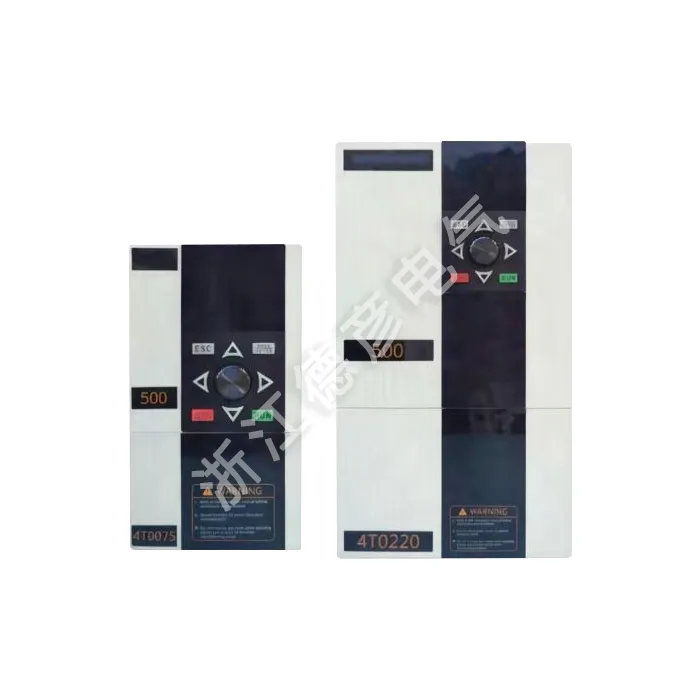
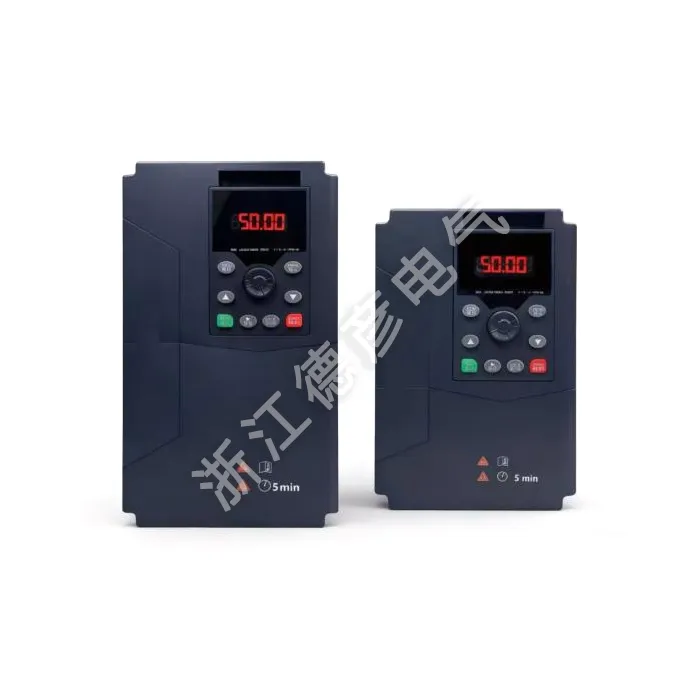
Most traditional wire drawing production lines suffer from recurring industry pain points including irregular wire tension fluctuation, frequent wire breakage, low finished product yield, excessive power consumption and complicated on‑site debugging. The professional Wire Drawing Machine Inverter with Tension Control developed by Deyan Electric is tailor‑made for metal and plastic wire drawing processing scenarios. Different from universal industrial inverters that cannot adapt to wire drawing dynamic load changes, this tension control inverter integrates dedicated industry algorithms, automatic coil diameter calculation and intelligent inertia compensation functions. It perfectly solves the core problems of unstable operation and high production costs in traditional wire drawing equipment, providing stable, energy‑saving and high‑yield variable frequency drive solutions for small workshops and large automated wire drawing factories worldwide.
In the actual production process of wire drawing processing, tension stability is the core factor that determines product quality and production efficiency. Most factory owners and on‑site technicians often fall into a production dilemma: ordinary general‑purpose inverters are cheap in procurement, but they cannot cope with the dynamic tension changes of wire drawing, winding and unwinding links. Slight jitter and tension deviation will lead to large‑area wire breakage, uneven wire diameter, defective finished products, and even frequent equipment shutdown and maintenance, which greatly increases production loss and labor costs.
Core Pain Points Solved by Professional Tension Control Inverter
Combined with thousands of on‑site wire drawing production cases, we summarize the common problems of traditional drive equipment in wire drawing processing. This tension control inverter targets each pain point one by one, realizing targeted technical optimization and fundamentally improving production conditions.
● Solve unstable tension & wire breakage problem: Ordinary inverters adopt fixed‑speed operation logic, which cannot adjust torque in real time with the change of coil diameter during winding. The tension becomes tighter or looser gradually, resulting in wire breakage and scattered defective products. This dedicated inverter dynamically adjusts output torque and speed through built‑in tension algorithm to maintain constant tension throughout the whole process.
● Solve high energy consumption of production line: Traditional drives run at full power for a long time, and the regenerative power generated by unwinding is completely wasted, resulting in serious power loss. The equipment supports DC bus sharing technology, which can recycle and reuse residual power, greatly reducing long‑term electricity expenditure of the factory.
● Solve difficult debugging & high technical threshold: Universal inverters need secondary programming and complex parameter debugging for wire drawing scenes, relying on professional engineers. This tension control inverter is pre‑loaded with exclusive wire drawing parameter groups, which can be put into use after simple setting, reducing technical dependence.
● Solve poor adaptability & frequent shutdown: Industrial workshops often have unstable grid voltage and load mutation. Ordinary inverters are prone to overvoltage, overcurrent and overheating alarms, resulting in production interruption. This product has wide voltage adaptability and perfect protection mechanism to ensure continuous and stable operation of the production line.
Product Core Technical Advantages
Different from the unified and rigid performance of ordinary industrial inverters, our Wire Drawing Machine Inverter with Tension Control carries out personalized technical iteration for the whole process of wire drawing, coarse drawing, fine drawing and winding‑unwinding, with more targeted functions and more stable performance.
Dual Tension Control Mode to Adapt to All Production Scenarios
The equipment supports open‑loop tension control and closed‑loop tension control dual switching mode, fully covering different equipment transformation and new construction needs of manufacturers. For old production line renovation projects without encoder installation, the open‑loop mode can realize stable tension operation without modifying mechanical equipment, saving renovation cost for customers. For high‑precision fine wire drawing and high‑speed wire drawing production lines with strict requirements on wire diameter consistency, the closed‑loop tension control mode matched with encoder can achieve ultra‑high precision tension control, with speed stabilization accuracy up to ±0.02%, ensuring zero deviation of finished wire diameter.
Intelligent Automatic Roll Diameter Calculation
A unique built‑in wire drawing winding mathematical model is the core advantage different from ordinary inverters. In the traditional wire drawing process, the coil diameter changes continuously with winding, and the tension of ordinary drives cannot follow up, resulting in unstable wire output. This inverter can automatically track and calculate the real‑time coil diameter without external auxiliary controller, and dynamically adjust the output torque and operating speed according to the diameter change, so that the tension remains constant from empty coil to full coil, completely avoiding wire breakage and wire looseness caused by diameter change.
Efficient Energy‑Saving Operation System
Aiming at the high power consumption of long‑term continuous operation of wire drawing equipment, this product is equipped with DC bus sharing and inertial power recovery functions. In the winding and unwinding matching system, the regenerative inertial power generated by the unwinding motor will not be consumed and wasted in the form of heat, but will be fed back to the bus and supplied to the winding host motor for reuse. Actual factory test data shows that the overall power saving rate of the production line can reach 15%‑30%, which greatly reduces the daily power consumption cost of continuous production workshops.
Super Strong On‑Site Environmental Adaptability
Aiming at the complex industrial environment of wire drawing workshops, the product adopts wide voltage input design, which can withstand ±15% grid voltage fluctuation, and is suitable for unstable power supply environments in industrial parks and remote processing zones. It is equipped with momentary power failure non‑stop function, which can maintain continuous operation in case of instantaneous power fluctuation and avoid production scrap and equipment failure caused by sudden shutdown. At the same time, it has excellent anti‑interference performance, which can resist the electromagnetic interference of surrounding mechanical equipment and ensure stable signal transmission of tension control system.
Industry Product Comparison: Tension Control Inverter VS Ordinary Inverter
In order to help customers intuitively distinguish the performance gap between professional wire drawing tension control inverters and ordinary universal inverters, we have sorted out a detailed industry comparison table based on actual production indicators, covering core indicators such as tension stability, yield, energy saving, debugging difficulty and service life, which is convenient for customers to select models accurately.
|
Comparison Item
|
Ordinary Universal Inverter
|
Deyan Wire Drawing Tension Control Inverter
|
|
Tension Control Performance
|
Fixed speed operation, no professional tension algorithm, tension fluctuates greatly with coil diameter change, easy to cause wire jitter and breakage
|
Dedicated wire drawing tension algorithm, real‑time torque adjustment, constant tension throughout the process, no jitter, no wire breakage
|
|
Finished Product Yield
|
Low yield, frequent defective products caused by tension deviation, high scrap rate and serious material waste
|
Ultra‑high tension stability, consistent wire diameter, effectively reduce scrap rate, improve finished product yield by more than 20%
|
|
Energy‑Saving Effect
|
No power recovery function, full power operation for a long time, serious power waste, high daily power consumption cost
|
Support DC bus power sharing and inertial power recovery, comprehensive power saving rate 15%‑30%, long‑term cost reduction significantly
|
|
Debugging Difficulty
|
No pre‑set wire drawing parameters, need professional secondary programming, high technical threshold, time‑consuming and labor‑intensive debugging
|
Pre‑loaded exclusive wire drawing parameter template, one‑key adaptive scene, simple on‑site debugging, no professional engineer required
|
|
Environmental Adaptability
|
Strict voltage adaptation range, easy to alarm and shut down in case of grid fluctuation, poor anti‑interference ability
|
Wide voltage tolerance + momentary power failure non‑stop + strong anti‑interference, adapt to complex industrial workshop environment
|
|
Protection Mechanism
|
Basic overvoltage and overcurrent protection, no targeted protection for wire drawing load mutation
|
Full‑dimensional protection such as load mutation protection, phase loss protection and overheating protection, targeted protection for wire drawing working conditions
|
|
Service Life
|
Frequent alarm shutdown and load impact, easy aging of internal components, short service life and high replacement cost
|
Smooth operation, buffer load impact, stable component operation, longer service life, lower later maintenance cost
|
Diversified Applicable Production Scenarios
This Wire Drawing Machine Inverter with Tension Control is not limited to a single wire drawing process. Relying on flexible parameter adjustment and stable tension control performance, it can adapt to all wire and cable processing and similar winding‑unwinding production scenarios, meeting the diversified production needs of different manufacturers.
1. Metal wire precision drawing: It is widely used in the drawing production of copper wire, aluminum wire, iron wire and steel wire, covering the whole process of coarse drawing, medium drawing and fine drawing, especially suitable for high‑speed and high‑precision metal wire processing lines.
2. Plastic monofilament drawing processing: For plastic wire, nylon monofilament and other drawing equipment, it solves the problems of uneven wire thickness and easy fracture of plastic wire caused by unstable tension, and improves the molding quality of plastic finished wire.
3. Cable industry winding and unwinding: It is matched with cable stranding machines and wire take‑up equipment to realize constant tension winding and unwinding of cable raw materials, avoid cable extrusion and stretching deformation, and ensure neat cable winding.
4. Metal foil and strip winding: Suitable for foil and strip processing equipment with high requirements for speed stability and tension consistency, with automatic inertia compensation function to ensure smooth start‑stop and speed switching of equipment.
5. Old production line intelligent renovation: It is the best choice for upgrading old wire drawing equipment. It does not need to replace mechanical equipment, only replace the drive inverter, which can quickly improve production stability and reduce renovation investment cost.
Reliable Quality & On‑Site After‑Sales Guarantee
For industrial equipment that runs 24 hours a day for a long time, quality stability and after‑sales service are the key concerns of factory purchasers. Many overseas buyers feedback that they care more about long‑term stable operation than simple product parameters. Sudden failures will interrupt batch production and bring huge order delivery risks. Deyan Electric always takes on‑site production stability as the core, and establishes a complete set of quality inspection and service system for wire drawing tension control inverters.
● Strict factory testing: Each equipment will pass power‑on aging test, tension logic simulation test, communication test and voltage fluctuation test before leaving the factory to ensure that each machine can adapt to complex working conditions and eliminate defective products.
● Strong load resistance: It has 150% overload capacity for 1 minute, which can cope with instantaneous load impact during wire drawing start‑up, wire breakage and speed switching, and avoid equipment damage caused by sudden load changes.
● Professional technical support: Provide free remote debugging guidance and parameter setting services. For customers with difficult on‑site debugging, the technical team provides one‑to‑one targeted solution guidance to ensure that the equipment exerts its full performance after installation.
● Complete technical documents: Deliver manuals, parameter sheets and typical case parameter reference files, convenient for local technicians to maintain and adjust in daily production.
FAQ
Q: Can this unit work on existing old wire‑drawing machines without mechanical modification?
A: Yes. Open‑loop tension mode allows direct retrofit without encoder or mechanical rework. When higher precision is required, users can add encoder hardware to activate closed‑loop tension control.
Q: What happens if the workshop power supply suffers frequent voltage swings?
A: Wide‑voltage input design tolerates ±15% voltage deviation. Momentary power loss ride‑through keeps the machine running through short‑term grid dips, preventing mass scrap caused by unexpected stops.
Q: Do I need an extra PLC to realize constant‑tension winding function?
A: No external PLC is required. Roll‑diameter calculation and tension logic are built‑inside the inverter. You only need to finish basic parameter setup on panel to get stable winding performance.
Q: Which types of production lines get the most obvious yield improvement?
A: Fine copper‑aluminum wire drawing, high‑speed multi‑die drawing lines and plastic monofilament production get the most obvious benefit. Constant tension greatly lowers wire‑break frequency and reduces material waste.