Blog

Why Have Dry-Type Power Transformers Become the New Favorite in Modern Power Distribution Systems?

2026-06-12 0 Leave me a message

In modern power systems, transformers perform the vital tasks of voltage conversion and power transmission, serving as the "heart" of grid operations. With the acceleration of urbanization and the rapid growth of the new energy industry, traditional oil-immersed transformers can no longer fully meet the demands of modern distribution systems for safety, environmental friendliness, and intelligence. Against this backdrop, dry-type power transformers—thanks to their unique advantages—have gradually become the mainstream choice for urban power grids, commercial buildings, and industrial projects.

How Dry-Type Transformers Work

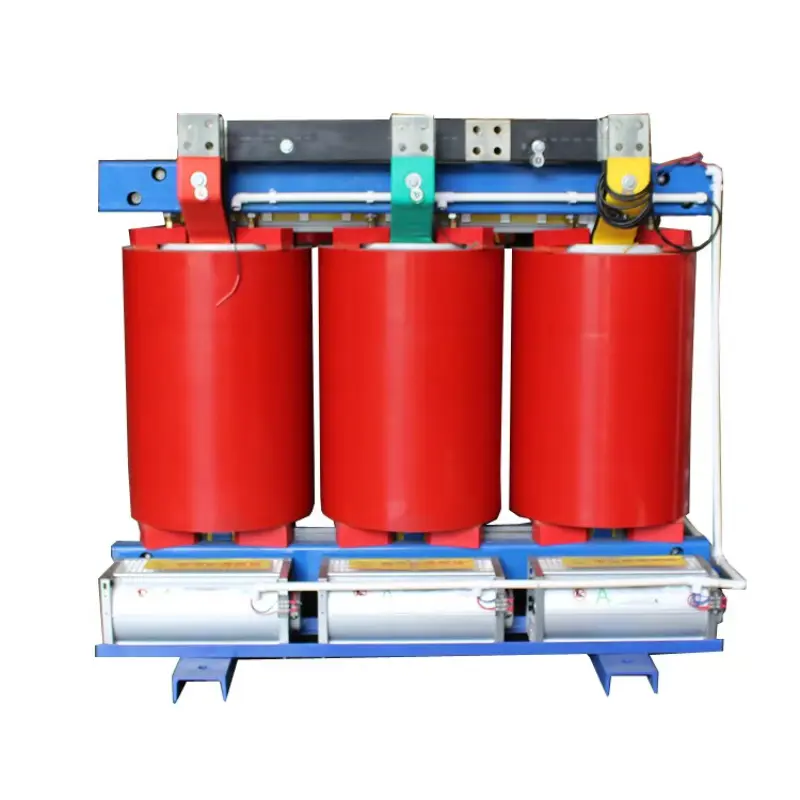
Unlike traditional oil-immersed transformers, which rely on insulating oil for insulation and heat dissipation, dry-type transformers use air as the primary insulating medium. They employ high-performance insulating materials—such as epoxy resin and fiberglass—to encapsulate and protect the windings.

Their core structure consists primarily of an iron core, high- and low-voltage windings, a temperature control system, and a cooling system. When current flows through the primary winding, the iron core generates an alternating magnetic field, inducing a corresponding voltage in the secondary winding to achieve power conversion. Because they do not use insulating oil, dry-type transformers completely eliminate safety hazards such as oil leakage, combustion, and explosion.

The SCB series epoxy resin cast dry-type transformers launched by Deyan Electric utilize an advanced vacuum casting process. This creates a robust, integrated winding structure that offers excellent insulation performance while effectively withstanding moisture, dust, and corrosive environments.

How Are Dry-Type Transformers Manufactured?

Creating a high-quality dry-type transformer involves multiple precision manufacturing stages.

It begins with the design phase. Engineers determine capacity, voltage ratings, and load characteristics based on project requirements. They use specialized software to conduct electromagnetic simulation analysis, optimizing the magnetic circuit and winding structure to minimize operating losses.

Next comes the coil manufacturing stage. High-precision winding equipment winds copper or aluminum conductors into coils, and vacuum pressure impregnation technology is applied to enhance insulation performance.

The manufacturing of the iron core is equally critical. High-quality cold-rolled grain-oriented silicon steel sheets are typically used, with precision cutting and stacking processes employed to minimize eddy current losses and noise levels.

Finally, the units proceed to the final assembly and testing stage. Components such as temperature controllers, cooling fans, and protection devices are installed, followed by a series of tests—including power-frequency withstand voltage tests, partial discharge tests, and load loss tests—to ensure compliance with national and industry standards.

Deyan Electric maintains a comprehensive production and testing system; its SCB, SG, and amorphous alloy dry-type transformer series undergo rigorous quality control, providing users with stable and reliable power supply assurance.

Why are more and more projects choosing dry-type transformers?

The primary advantage of dry-type transformers is safety.

In densely populated areas such as subways, hospitals, schools, and commercial complexes, oil-immersed transformers pose a potential fire risk in the event of equipment failure. In contrast, dry-type transformers feature an oil-free design, offering excellent flame-retardant and explosion-proof properties.

Additionally, dry-type transformers operate with low noise levels—typically around 50 decibels—making them ideal for environments with strict noise requirements, such as office buildings, hotels, and large shopping malls.

For industrial enterprises, dry-type transformers are capable of withstanding demanding operating conditions, including high temperatures, high humidity, and heavy dust. Deyan Electric’s SCB series products are widely used in sectors such as metallurgy, chemicals, manufacturing, and data centers, ensuring a stable power supply for critical equipment.

With the rapid development of photovoltaic power plants, wind power generation, and energy storage systems, the advantages of dry-type transformers—namely their compact size and flexible installation—are fully realized. Deyan Electric’s specialized dry-type transformer solutions for new energy effectively meet the requirements for grid connection and auxiliary power supply in the new energy sector.

Intelligence is the future direction of development.

The power industry is currently advancing rapidly toward digitalization and intelligence.

Modern dry-type transformers have evolved beyond traditional power conversion equipment to become integral components of intelligent power distribution networks. Through the use of temperature sensors, online monitoring devices, and remote communication systems, operators can monitor equipment status in real-time, enabling fault early warning and predictive maintenance. Deyan Electric’s new generation of smart dry-type transformers supports temperature monitoring, remote communication, and intelligent O&M management, helping users enhance operational efficiency and reduce maintenance costs.

Conclusion

From urban power grids to industrial manufacturing, and from commercial buildings to new energy projects, dry-type power transformers are becoming a vital pillar of modern power distribution systems. Driven by advantages such as safety, environmental friendliness, operational reliability, ease of maintenance, and intelligent capabilities, market demand for these transformers continues to grow.

As a professional manufacturer of power equipment, Deyan Electric remains dedicated to technological innovation in dry-type transformers. The company has developed a comprehensive product portfolio—including SCB epoxy resin cast dry-type transformers, SG three-phase dry-type transformers, energy-efficient amorphous alloy transformers, and transformers for new energy applications—to provide customers with efficient, safe, and reliable power solutions, collectively advancing the development of green, smart power grids.

Related News
Leave me a message
X
We use cookies to offer you a better browsing experience, analyze site traffic and personalize content. By using this site, you agree to our use of cookies. Privacy Policy
RejectAccept