Blog

The Dominance of Oil: Why SF₆ Gas is Not Used for Insulating Transformer Windings

2026-03-09 0 Leave me a message

In the world of high-voltage electrical engineering, Sulphur Hexafluoride (SF₆) is often hailed as a wonder material. Since its commercialization in the mid-20th century, this colorless, odorless, and inert gas has revolutionized the industry. Its exceptional dielectric strength—roughly 2.5 to 3 times that of air—and unparalleled arc-quenching capabilities make it the ideal medium for Gas-Insulated Switchgear (GIS) and Gas-Insulated Transmission Lines (GIL). These devices have enabled the construction of compact substations in crowded urban centers, a feat previously unimaginable with conventional air-insulated equipment.

Given this success, a logical question arises: If SF₆ is so effective at insulating high-voltage components in switchgear, why isn't it the dominant medium inside the most critical asset of the power grid—the power transformer? While SF₆-insulated transformers (GITs) do exist for niche applications, they remain a rarity compared to the ubiquitous oil-immersed transformers that hum away in substations worldwide. The answer lies not in a single flaw of SF₆, but in a combination of fundamental physical limitations, complex engineering challenges, and increasingly critical environmental concerns that make traditional mineral oil a vastly superior choice for the specific environment of a transformer winding.

1. The Critical Role of Cooling: A Physical Mismatch

The most fundamental reason for the supremacy of oil over SF₆ in transformers is thermal management. A power transformer is not a static device; it is a dynamic source of heat. When electricity flows through the windings, resistance generates heat (copper losses), and the alternating magnetic field in the iron core generates additional heat (iron losses). This heat must be efficiently removed to prevent the insulation from degrading and the transformer from failing catastrophically.

Herein lies the critical difference between a liquid and a gas.

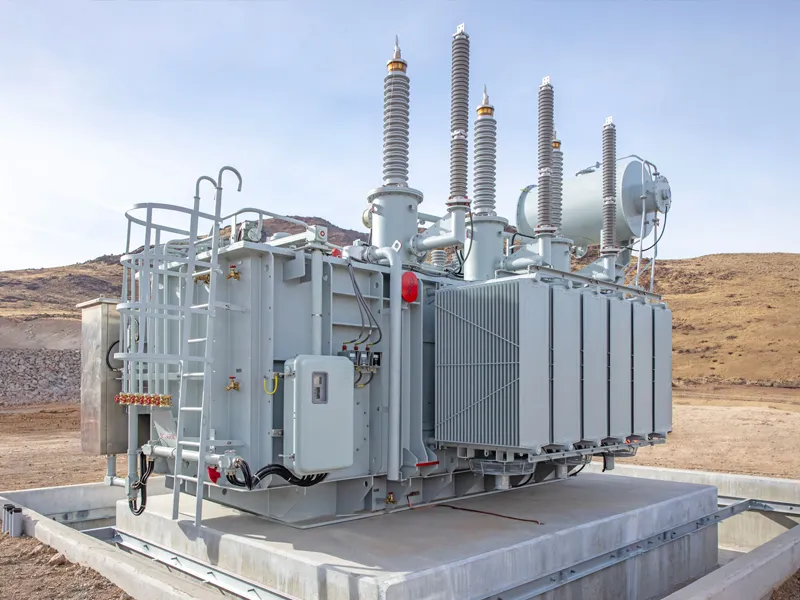
Transformer Oil as a Coolant: Oil is an exceptional cooling medium. It possesses a high specific heat capacity and thermal conductivity, meaning it can absorb a large amount of heat and transfer it quickly. In a transformer, the oil is in direct contact with every millimeter of the windings and the core. Through natural convection or forced circulation via pumps, the hot oil flows to the external radiators or cooling fins, where it releases the heat to the surrounding air. This process is incredibly efficient. The oil physically wets the surfaces, ensuring that heat is drawn away from even the deepest, most confined spaces within the winding structure.

SF₆ as a Coolant: Gases, by their very nature, are poor at transferring heat compared to liquids. Their density is much lower, and they have a far lower capacity to carry thermal energy. While increasing the pressure of SF₆ can improve its density and thus its cooling capability, it still lags behind oil by orders of magnitude. In a Gas-Insulated Transformer (GIT), this creates a significant bottleneck. To manage the heat, designers are forced to make compromises. They often have to de-rate the transformer, meaning it cannot operate at its full theoretical capacity without overheating. Alternatively, they must design incredibly complex and bulky cooling ducts and pathways within the windings to circulate the gas effectively. This complexity adds cost and reduces the overall power density of the transformer, making it less competitive than a simpler, oil-filled design for high-capacity applications.

2. The Complex Geometry of Winding Insulation

The environment inside a transformer winding is an electrical nightmare of complexity, a stark contrast to the relatively simple, controlled geometry inside a GIS.

Electric Field Sensitivity: SF₆'s dielectric strength is highly dependent on the uniformity of the electric field. In a perfectly uniform field, it performs brilliantly. However, its insulation properties degrade dramatically in non-uniform or highly divergent fields. Transformer windings are not smooth cylinders; they are composed of numerous coils, sharp corners, edges, and protruding conductors. These features inherently create areas of intense, non-uniform electric fields. In an oil-filled transformer, the oil's higher dielectric constant helps to "smooth out" some of these field concentrations. In SF₆, these same sharp edges become sources of intense partial discharge, which can erode insulation over time and lead to failure.

The Interface Problem: Modern high-voltage insulation is always a composite system, combining a fluid (liquid or gas) with a solid material. In an oil-filled transformer, cellulose-based paper and pressboard are used to wrap the conductors. The oil perfectly impregnates this paper, filling every microscopic void. This creates a seamless, homogeneous insulation barrier with excellent dielectric properties. In a GIT, the situation is fundamentally different. The gas cannot impregnate the solid insulation wrapped around the wires. Instead, a distinct interface is created between the solid (like polyester film or Nomex paper) and the gaseous SF₆. Because these two materials have vastly different abilities to permit an electric field (their permittivity), the electric field lines become distorted and concentrated at this interface. This creates a high risk of creepage discharges, where electricity flashes over the surface of the solid insulation. This type of discharge is one of the most common and dangerous failure modes in gas-insulated systems and requires extremely careful and complex design to manage.

3. The Problem of Contaminants and Decomposition

While pure SF₆ is chemically inert, its behavior changes under electrical stress.

Sensitivity to Particles: SF₆ is highly sensitive to contamination. A tiny, loose conductive particle inside a GIS tank can drastically reduce the insulation strength. In a transformer, such particles are inevitable to some degree. In oil, a small metal particle might be harmlessly suspended or settle to the bottom, its impact on insulation somewhat mitigated. In high-pressure SF₆, a similar particle can become energized, lift off the surface, and move towards a region of lower potential, potentially triggering a complete breakdown.

Decomposition Products: When SF₆ is subjected to arcing, corona, or high-energy sparks, it decomposes. It breaks down into various byproducts, including lower fluorides of sulfur (like SF₄, S₂F₁₀) and, in the presence of moisture, highly corrosive and toxic substances like hydrogen fluoride (HF). These byproducts can attack and degrade both the metallic components and the solid insulation inside the transformer. This means that if a fault does occur in a GIT, the aftermath is not just a simple outage; the equipment can be internally contaminated, requiring extensive and costly cleanup or even leading to accelerated failure later on. In an oil-filled transformer, while arcing also creates gases and sludge, the oil itself acts as a medium to dissolve and dilute these byproducts, and it can often be processed or replaced.

4. The Environmental and Economic Pressures: The GWP Factor

In the 21st century, perhaps the most significant factor working against SF₆ is its environmental impact. This issue has transformed it from a mere engineering challenge into a political and regulatory one.

A Potent Greenhouse Gas: SF₆ is the most potent greenhouse gas known to science. Its Global Warming Potential (GWP) is approximately 23,500 times greater than that of CO₂ over a 100-year period. To put it simply, releasing just one kilogram of SF₆ into the atmosphere has the same long-term warming effect as driving a car for tens of thousands of miles. Furthermore, it is incredibly stable and persists in the atmosphere for thousands of years. While the electrical industry strives to prevent leaks, some fugitive emissions are inevitable over the decades-long lifespan of a transformer, especially during manufacturing, maintenance, and decommissioning.

The Search for Alternatives: Under international agreements like the Kyoto Protocol and stringent regulations, particularly in the European Union, there is immense pressure to phase down the use of F-gases like SF₆. This has spurred a global race to find environmentally friendly alternatives. Manufacturers are now developing and commercializing "green" gas-insulated equipment using novel gas mixtures based on fluoronitriles (like C4-FN) or fluoroketones (like C5-FK) mixed with CO₂. While these are still fluorinated compounds, their GWP is a tiny fraction of that of SF₆, and their atmospheric lifetime is much shorter. In this new environmental landscape, investing heavily in a new generation of large-scale SF₆ transformers for general use seems like a step in the wrong direction.

Related News
Leave me a message
X
We use cookies to offer you a better browsing experience, analyze site traffic and personalize content. By using this site, you agree to our use of cookies. Privacy Policy
RejectAccept