Blog

Oil Or Dry

2026-09-11 0 Leave me a message

What Are the Fundamental Differences?

The key to selection lies in the completely different insulation and heat dissipation methods adopted by the two types of transformers.

An oil-immersed transformer relies on insulating oil (mineral oil or natural ester oil) circulating inside the sealed oil tank to transfer heat to external radiators. This design delivers excellent cooling efficiency and strong overload capacity.

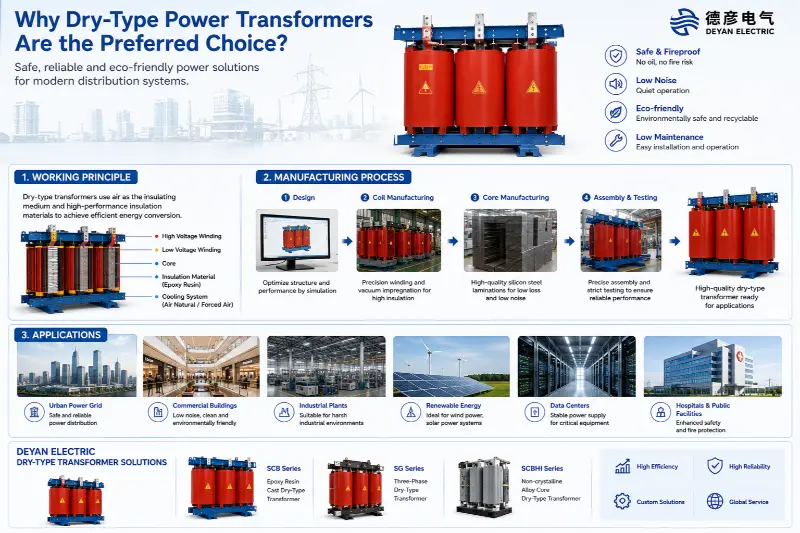
A dry-type transformer is fully air-cooled and adopts solid insulating materials such as epoxy resin casting. The absence of liquid eliminates leakage risks, yet its cooling efficiency is relatively lower.

In-depth Performance Comparison

  • Insulation & Cooling Medium: Oil-immersed type uses circulating mineral oil or ester oil for heat dissipation; dry-type type applies solid insulating materials like epoxy resin with air cooling.
  • Installation Location: Oil-immersed transformers are suitable for outdoor substations and pole-mounted installation; dry-type transformers are ideal for indoor distribution rooms, basements and load centers.
  • Fire Safety: Mineral oil for oil-immersed units is combustible, while natural ester oil features self-extinguishing property; dry-type transformers contain no flammable liquid with no risk of fire spread.
  • Maintenance Workload: Oil-immersed transformers require regular oil quality testing and gasket replacement; dry-type transformers only need periodic dust removal for daily operation with minimum maintenance.
  • Loss Level: Under the same capacity, oil-immersed transformers have lower no-load loss and load loss; dry-type transformers show relatively higher losses at large capacities.
  • Footprint: Oil-immersed transformers feature a more compact structure for the same capacity; dry-type transformers generally demand larger installation space.
  • Overall Cost: Oil-immersed transformers have lower unit-capacity cost; dry-type transformers come with higher unit-capacity cost.
  • Environmental Risk: Oil-immersed transformers carry risks of leakage and contamination; dry-type transformers produce zero pollution to soil and water sources.
  • Design Service Life: Oil-immersed transformers: approx. 20-30 years; dry-type transformers: over 30 years.
  • Overload Capacity: Oil-immersed transformers boast strong short-term overload capacity; dry-type transformers have relatively limited overload capability.

The efficiency gap is larger than you might expect. Independent studies have verified notable efficiency differences between the two categories. Take a 1000 kVA transformer running 24/7 as an example: a 1% efficiency gap translates into thousands of US dollars in extra electricity expenses every year. The cumulative gap over two decades can be substantial.

Decision-making Framework: Which to Choose under Given Circumstances?

Typical Scenarios for Oil-immersed Transformers (S11/S13 Series)

Installed outdoors with relatively controllable fire hazards; Limited budget requiring lower unit-capacity cost and reduced long-term operating losses; Heavy load fluctuations calling for overload margin; Constrained installation space; Projects in remote regions (Africa, Southeast Asia, Latin America) requiring durable outdoor equipment with reasonable maintenance demands.

Typical Scenarios for Dry-type Transformers (SCB Series)

Indoor installation (buildings, basements, data centers and other densely-occupied locations); Fire safety set as top priority; Stringent environmental regulations requiring zero soil and water contamination; Operation under high-humidity conditions; Preference for minimal-maintenance solution with no need for periodic oil-sampling tests throughout the whole-life cycle.

Real-world Project Selection Cases

Oil-immersed application case: EPC contractors and mining projects across Africa and Southeast Asia generally prefer oil-immersed transformers for their durability in high-temperature and high-dust environments. Models equipped with C5-M marine-grade anti-corrosion coating and seismic reinforcement have become standard configurations for coastal and remote-site installations.

Dry-type application case: For data centers and urban infrastructure projects, SCB dry-type transformers are mandatory for indoor installation. Increasingly, they are fitted with optical-fiber temperature sensors and partial-discharge sensors to enable real-time temperature monitoring and predictive maintenance.

Why Choose Zhejiang Deyan Electric?

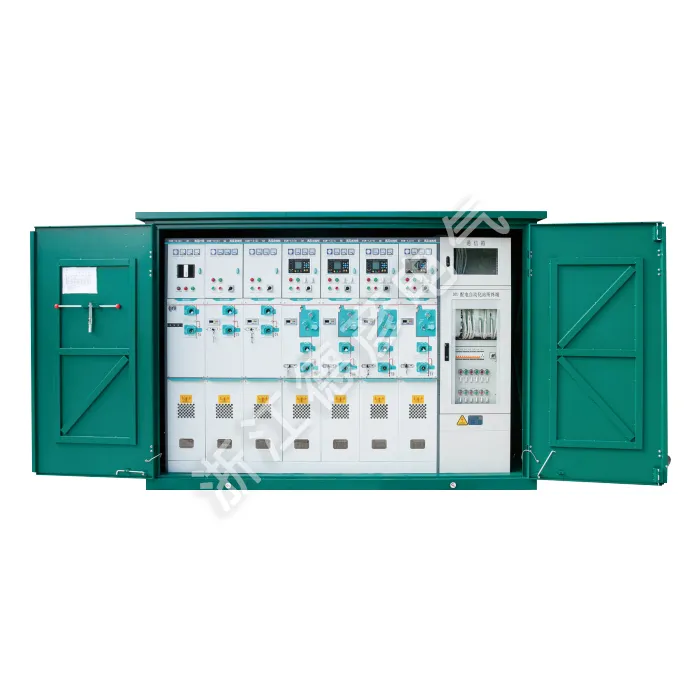
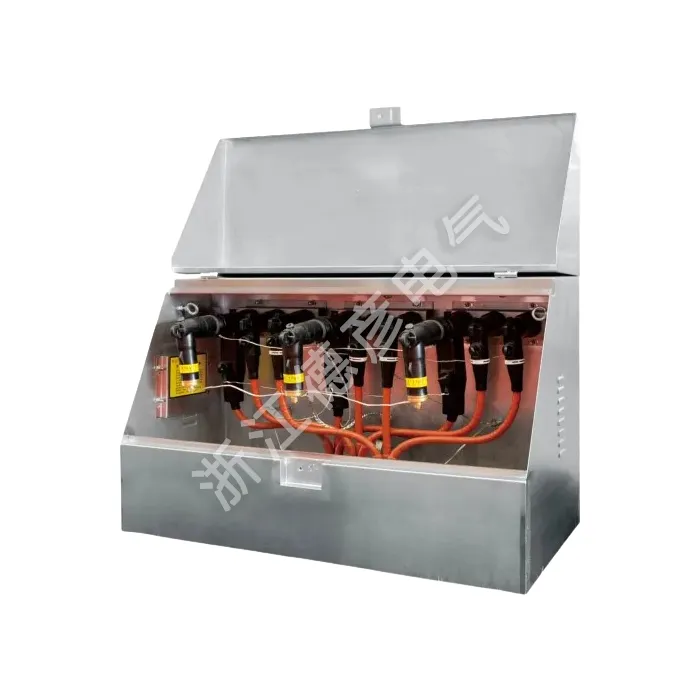
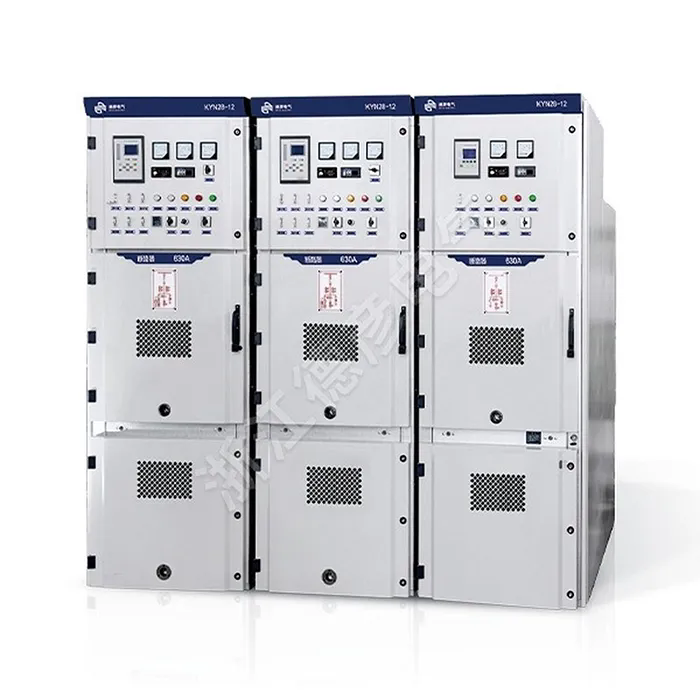
Zhejiang Deyan Electric Co., Ltd. is located in Yueqing Economic Development Zone, Zhejiang Province — a core cluster of China's electrical manufacturing industry. Its product portfolio covers prefabricated substations, compact substations, high-low-voltage switchgears and complete power distribution solutions.

Supported by direct factory supply and self-operated import-export qualifications, our transformers and switchgear strictly comply with IEC 60076, ISO 9001 and GB/T standards. Customization is available according to your voltage class, frequency (50 Hz / 60 Hz) and site operating conditions.

Need assistance with model selection?

Every project has its unique characteristics. Contact our team and inform us of your site conditions, voltage requirements and budget range. We will help you select the proper transformer type and deliver a complete solution tailored to your needs.

Related News
Leave me a message
X
We use cookies to offer you a better browsing experience, analyze site traffic and personalize content. By using this site, you agree to our use of cookies. Privacy Policy
RejectAccept