Blog

How can we fix a distribution transformer malfunction?

2026-01-28 0 Leave me a message

Failures in distribution transformers typically stem from several factors, including design and manufacturing, operating environment, and maintenance standards. To help you quickly grasp core issues and countermeasures, the table below summarizes common failures, user-side prevention points, and technical solutions provided by manufacturers:

Winding and Insulation Failures 

Overload, short-circuit current impact, insulation aging/moisture ingress, manufacturing defects 

Regular insulation resistance testing, avoid prolonged overloads, prevent secondary-side short circuits 

Use high-conductivity copper windings, premium insulation materials; implement hydrogen gas online monitoring for early warning

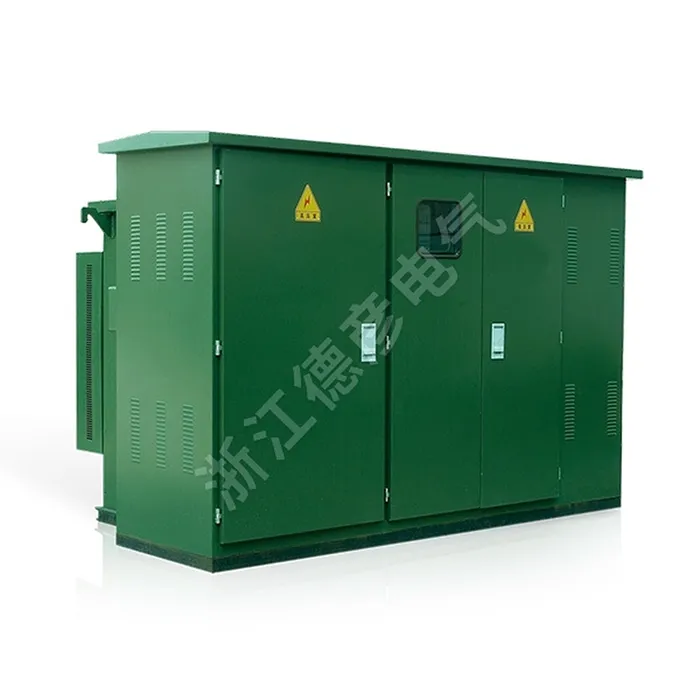
High voltage power transformer

Core Failures

Multiple grounding points, damaged silicon steel sheet insulation

Core removal inspection to remove foreign objects, DC current impulse method to eliminate grounding points

Improve core structure and clamp insulation processes, ensure secure fixation during transportation 

Tap Changer Failures

Poor contact, contact erosion, improper manual adjustment 

Conduct regular inspections; operate only by qualified personnel

Provide on-load tap-changing distribution transformers for automatic voltage regulation under load

Bushing and Oil Leakage

Seal aging, porcelain bushing flashover, welding or assembly defects

Clean bushings, inspect seals, repair or replace seals at leak points

Improve seal design (e.g., rubber beads, flanges), enhance tank welding techniques

Overvoltage and Lightning Strikes

Lightning overvoltage, system resonance

Install and regularly test surge arresters

Optimize winding design for surge resistance, provide overvoltage protection coordination schemes

Accessory and Connection Failures

Overheating current-carrying joints, cooling system abnormalities  

Conduct regular infrared temperature measurements, tighten connection points

Use anti-loosening structural bolts, crimped connections, provide efficient cooling systems

Manufacturer Core Solution Insights

Regarding the technical solutions in the table above, two key advancements warrant closer examination:


1.  On-Load Tap-Changing Distribution Transformers (OLTCDTs): This represents a significant technological direction. Traditional transformers require manual voltage adjustment during power outages. In contrast, VRDTs equipped with on-load tap changers automatically stabilize voltage within standard ranges (e.g., ±10%) without interrupting power supply. This makes them particularly suitable for regions with significant voltage fluctuations or industrial users sensitive to power quality.

2.  Condition Monitoring and Early Warning Technology: Shifting from passive periodic inspections to proactive predictive maintenance. For instance, continuous monitoring of hydrogen content in transformer oil serves as one of the most sensitive indicators for detecting early-stage insulation overheating or degradation, enabling warnings weeks or months in advance. Some advanced monitoring devices now integrate multi-parameter tracking of hydrogen, humidity, temperature, and more.

Comprehensive Prevention and Management Recommendations

Beyond adopting new technologies, standardized daily management remains critical:

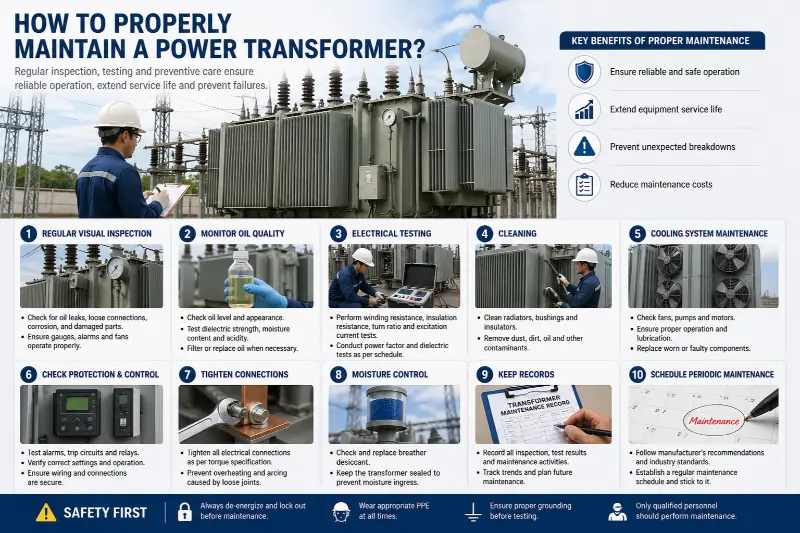
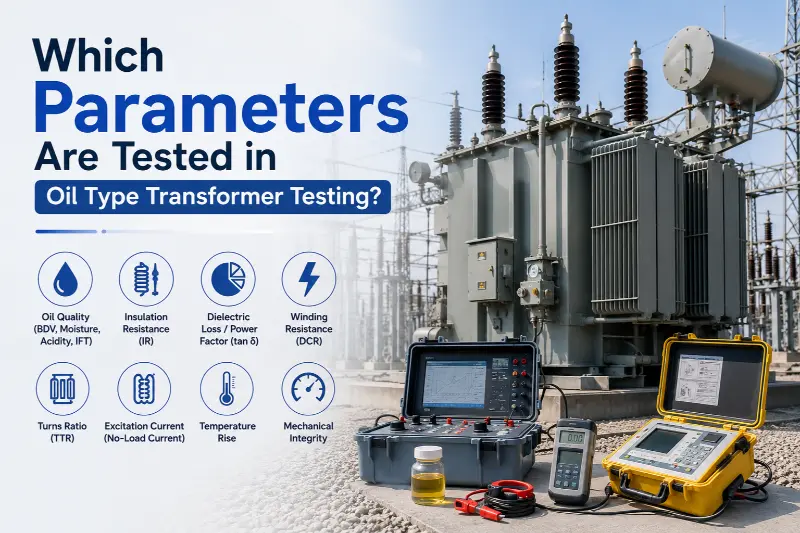
Rigorous Pre-Commissioning Testing: Includes visual inspections, seal integrity checks, and electrical tests such as insulation resistance measurement using megohmmeters.

Standardized Operational Maintenance:

Load Management: Monitor three-phase loads to prevent prolonged severe imbalances.

Environmental Control: Maintain a dry, ventilated, and clean installation environment.

Protective Devices: Ensure proper configuration and functionality of surge arresters, high/low-voltage side fuses, or circuit breakers.

Establish a Professional Maintenance System: Enhance personnel training, refine inspection and periodic maintenance protocols, and consider establishing equipment condition records.

distribution transformer

Summary and Decision-Making Approach

When selecting solutions, follow this logic

1.  Basic Protection: Regardless of transformer age, ensure a sound installation environment and correctly configure overcurrent and lightning protection devices.

2.  Proactive Upgrades: For critical, high-importance loads or areas with unstable voltage, investing in on-load tap-changing distribution transformers fundamentally improves power quality.

3.  Intelligent Prediction: For large, critical, or aging transformers, investing in online condition monitoring systems (e.g., hydrogen gas monitoring) enables predictive maintenance—an effective strategy to prevent unplanned outages.

If you could share the specific application scenarios (e.g., general industrial plants, sensitive data centers, remote mountainous areas), voltage levels, and capacity ranges of your transformers, Deyan electric team can provide more tailored analysis


Related News
Leave me a message
X
We use cookies to offer you a better browsing experience, analyze site traffic and personalize content. By using this site, you agree to our use of cookies. Privacy Policy
RejectAccept